
Three-quarters of adults facing digital barriers are of working age, as Good Things calls for Budget action
We’re urging the Chancellor to cut connectivity costs and invest in digital and AI skills, as new research reveals the scale of digital barriers across the UK.
Summary of new research:
- Six in ten (62%) UK adults face digital barriers, as charity warns exclusion extends far beyond the offline population. Three quarters of this group (26 million people) are working age adults, under 65 years old; with almost half living on less than £30,000 a year.
- The new research highlights more support is needed to improve online confidence. Four in ten adults (40%) worry about being left behind as more services move online. This number is rising year on year, not reducing (up from 34% in 2025).
- Only half of UK adults (50%) feel confident to do most things they need to do online.
- At the sharp end of digital exclusion:
- Over 2.2 million adults depend on others to go online for them.
- Over 1 million adults solely depend on WiFi outside of home to go online.
What the new research reveals
We have found that six in ten UK adults (62%) face at least one challenge using digital technology in their everyday lives. Three-quarters of those facing digital barriers are of working age (under 65), while almost half live on less than £30,000 a year. As a result of these findings, we are urging the Chancellor to take decisive action on digital exclusion in the upcoming Budget, warning that these barriers risk impacting access to jobs and economic growth.
The research also reveals that only half of all UK adults (50%) feel confident doing most things they need to do online. At the sharp end of exclusion, people are locked out of everyday banking, healthcare, and use of public services. Over 2.2 million adults depend on others to do things for them online, and around 1 million adults solely depend on WiFi outside of home to go online.
Polling commissioned by Good Things suggests that concern about digital exclusion is growing, with four in ten adults (40%) now worrying about being left behind as more services move online, compared with 34% in 2025.
What we want to see in the budget
These statistics illustrate that digital exclusion reaches far beyond the stereotypical older people or those completely offline. With digital access and skills increasingly essential to everyday life, we are urging the Chancellor to use the Budget to cut connectivity costs and invest in community-based digital and AI skills support. It wants digital inclusion embedded in wider plans for jobs, public services and economic growth, specifically:
- Cutting the cost of connectivity for people who struggle the most. The Government should commit to a new affordability settlement for home broadband. This could include cutting VAT on broadband social tariffs targeting the poorest households.
- Launching a multi-year fund to boost digital and AI skills support in communities. Everyone should be able to get help locally to learn new AI and digital skills, and build their digital confidence.
Community organisations have been filling the digital skills gap, offering support for local people to build online confidence and gain new skills. Their experience demonstrates how a nationwide, government-backed programme could make a real difference to people’s lives. At ACDA Skills Training in London, staff supported a learner who wanted to work at Heathrow Airport but was struggling to navigate the online interview process. After receiving help setting up an email address and using the recruitment portal, he secured the job. Manager Vick Virdee recalls,
“By teaching him to navigate the online portal and setting him up with an email address, he got the job, completely changing his life financially and socially.”
In Stockport, digital inclusion support also helped a man who had struggled to access healthcare online to register with his GP and book an appointment. Nina Trueman, Digital Champion at Starting Point explains,
“After a year’s wait, just two hours helping him go through everything he needed meant we got him onto the NHS App, registered with his doctor, and booked an appointment for the following day.”
ACDA Skills Training and Starting Point are just two of the 5,000 plus community organisations and libraries Good Things supports across the UK. Through its National Digital Inclusion Network, we provide organisations like ACDA and Starting Point with resources (like free mobile data, devices, learning tools) they can use to give people the access, devices, skills and confidence they need to carry out everyday tasks and take part in our digital society, together supporting over 150,000 people in the last year.
Vicki Sellick MBE, CEO, Good Things Foundation says:
“Digital exclusion isn't just about people who have never used the internet, the reality is that millions of Brits face barriers to using technology in everyday life - whether that’s using the NHS App or paying a mobile phone bill every month. If we want growth in every postcode and public services that work for everyone, we need to make sure everyone is comfortably online.
The Budget is an opportunity for the Chancellor to take the action needed to ensure that digital confidence does not continue to decline, in a world that requires us to be digitally savvy.
By making connectivity more affordable for those on the lowest incomes and committing to long-term investment in community-based digital and AI skills support, the tides can be turned. Ensuring everyone is able to keep up and participate online means the Government can unlock Britain’s full economic potential.”
Delve into the research
Read more about what this new research reveals in our insights blog from Research and Data Insights Officer, Stasia Zaranko Carver.
Find out what else we're asking of Government
Read about our manifesto and what we think Government need to do to close the digital divide - for good.
You may also be interested in
-
 19/10/2026 Digital inclusion insights
The hidden digital divide: why millions of working-age adults are struggling to keep up
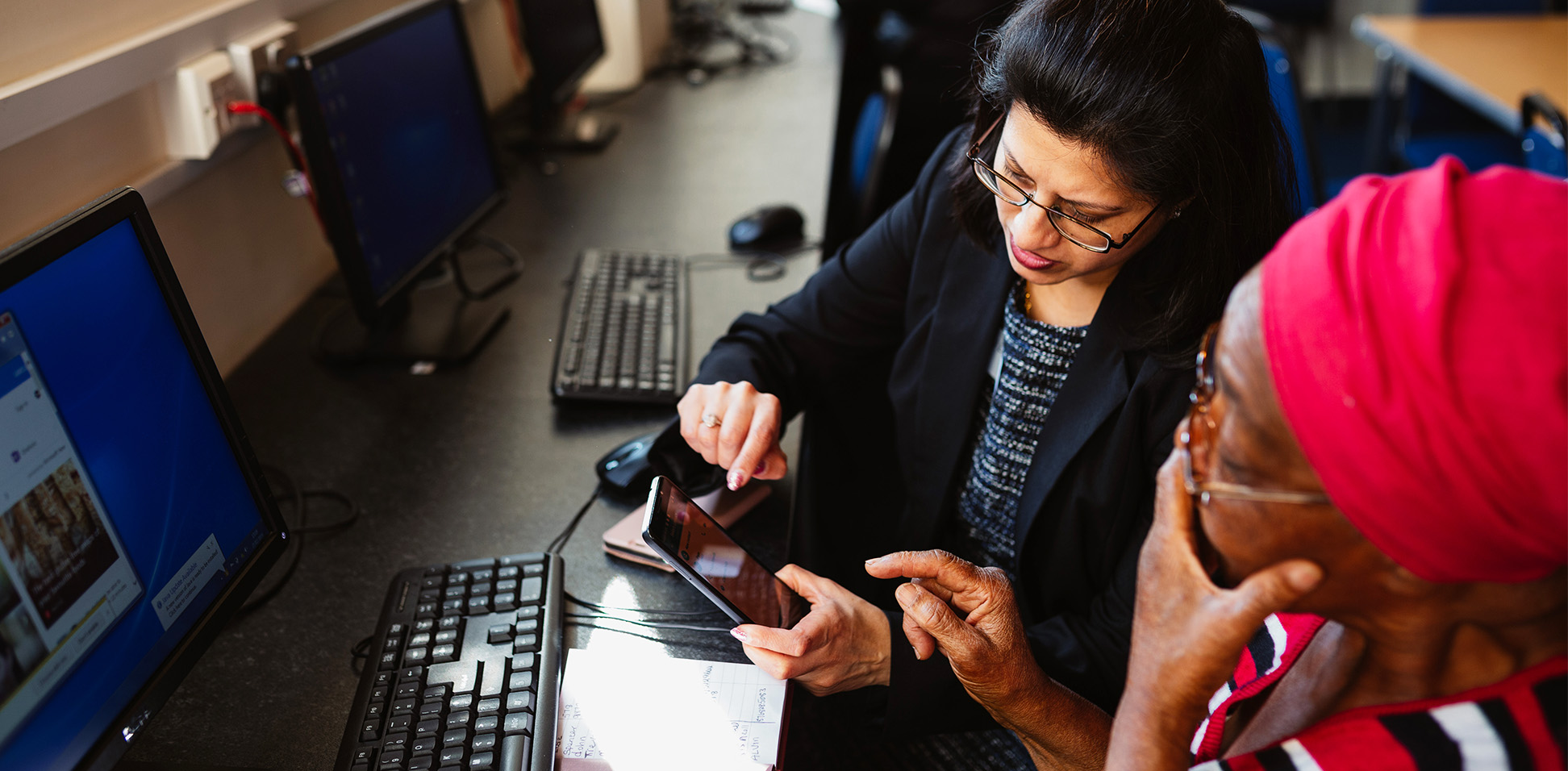
Research and Data Insights Officer, Stasia Zaranko Carver, explores new research which reveals that the UK's digital divide extends far beyond older populations, leaving 6 in 10 working-age adults facing everyday digital barriers and growing anxiety.
-
 14/07/2026 Research & evidence
Our Digital Nation
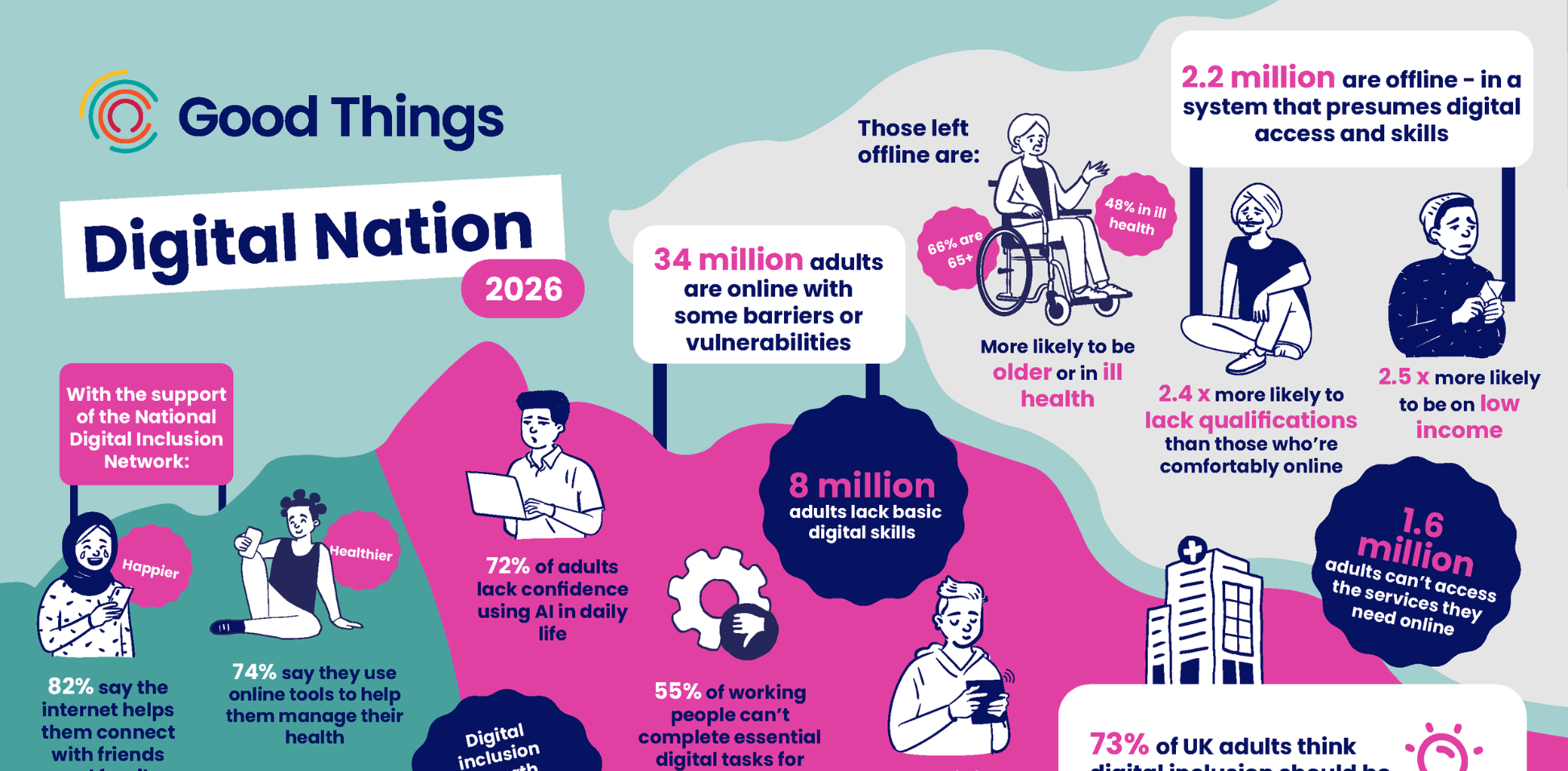
What is the state of the UK's digital divide? Each year, Good Things Foundation gathers new facts and stats to reveal the reality of digital exclusion.
-
 07/10/2026 Digital inclusion insights
Bringing digital inclusion to party conferences
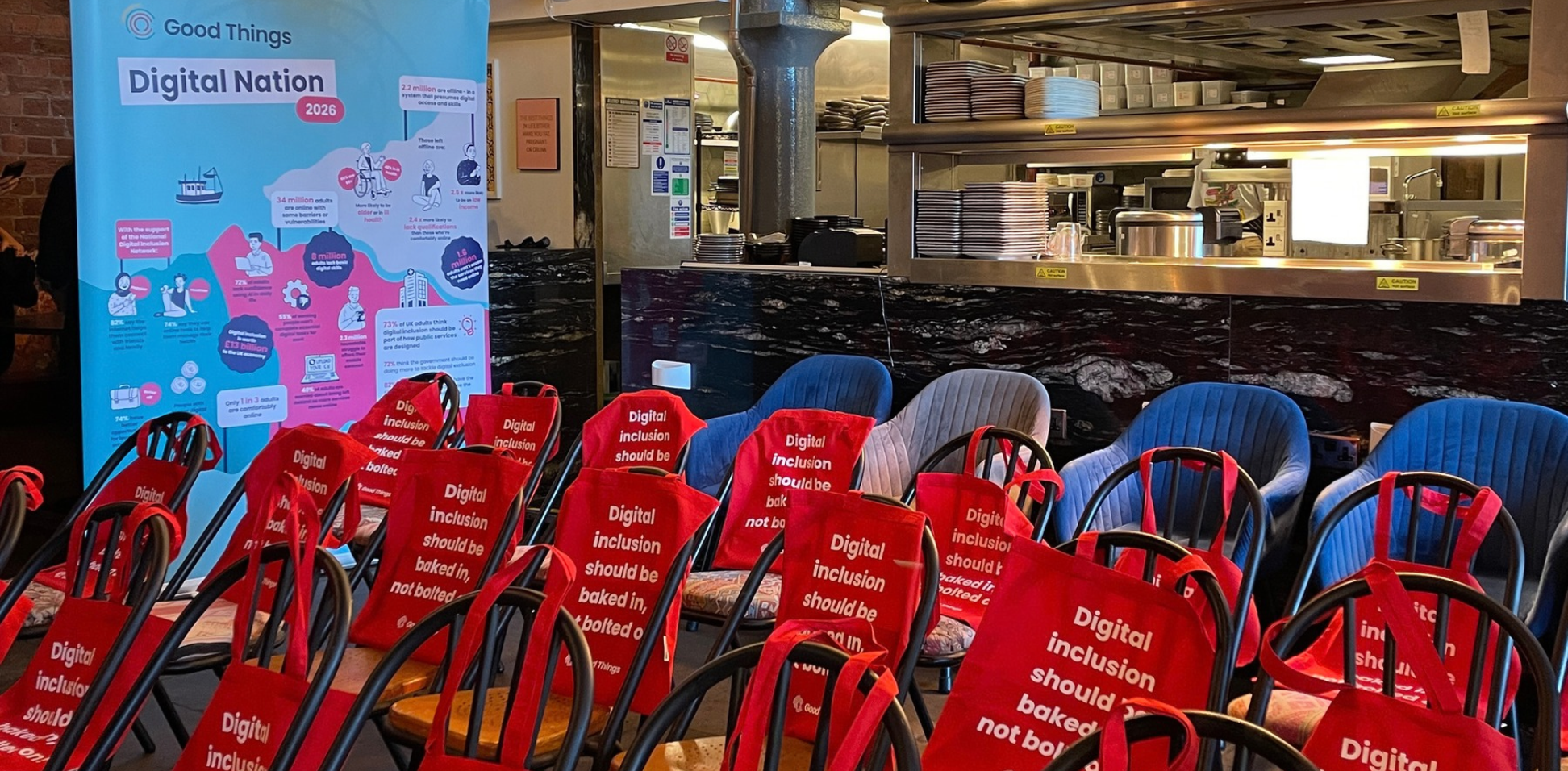
Each year, we attend political party conferences advocating for digital inclusion to be baked into UK policy. After the busiest season yet, here's our key takeaways from the last few weeks: