
The hidden digital divide: why millions of working-age adults are struggling to keep up
Research and Data Insights Officer, Stasia Zaranko Carver, explores new research which reveals that the UK's digital divide extends far beyond older populations, leaving 6 in 10 working-age adults facing everyday digital barriers and growing anxiety.
In today’s digital landscape, having the access, skills, and confidence to navigate the online world isn’t a luxury - it’s the essential baseline to participate in work, healthcare, and everyday life. Yet, as online services and everyday interactions move online by default, millions of people across the UK are struggling to keep up.
Our new research highlights a stark reality: digital exclusion goes far beyond offline or older populations - and anxiety about being left behind is on the rise. Digging deeper into our latest data, we unpack how the digital divide is shifting, what the numbers tell us about modern digital vulnerability - and what action is needed to unlock the UK's full economic and social potential.
Our findings draw on deeper analysis of data gathered using our Indicators of Digital Inclusion (IDIs), as well as new polling commissioned by Good Things Foundation this year.
Reframing the digital divide: exclusion reaches far beyond the offline or older population
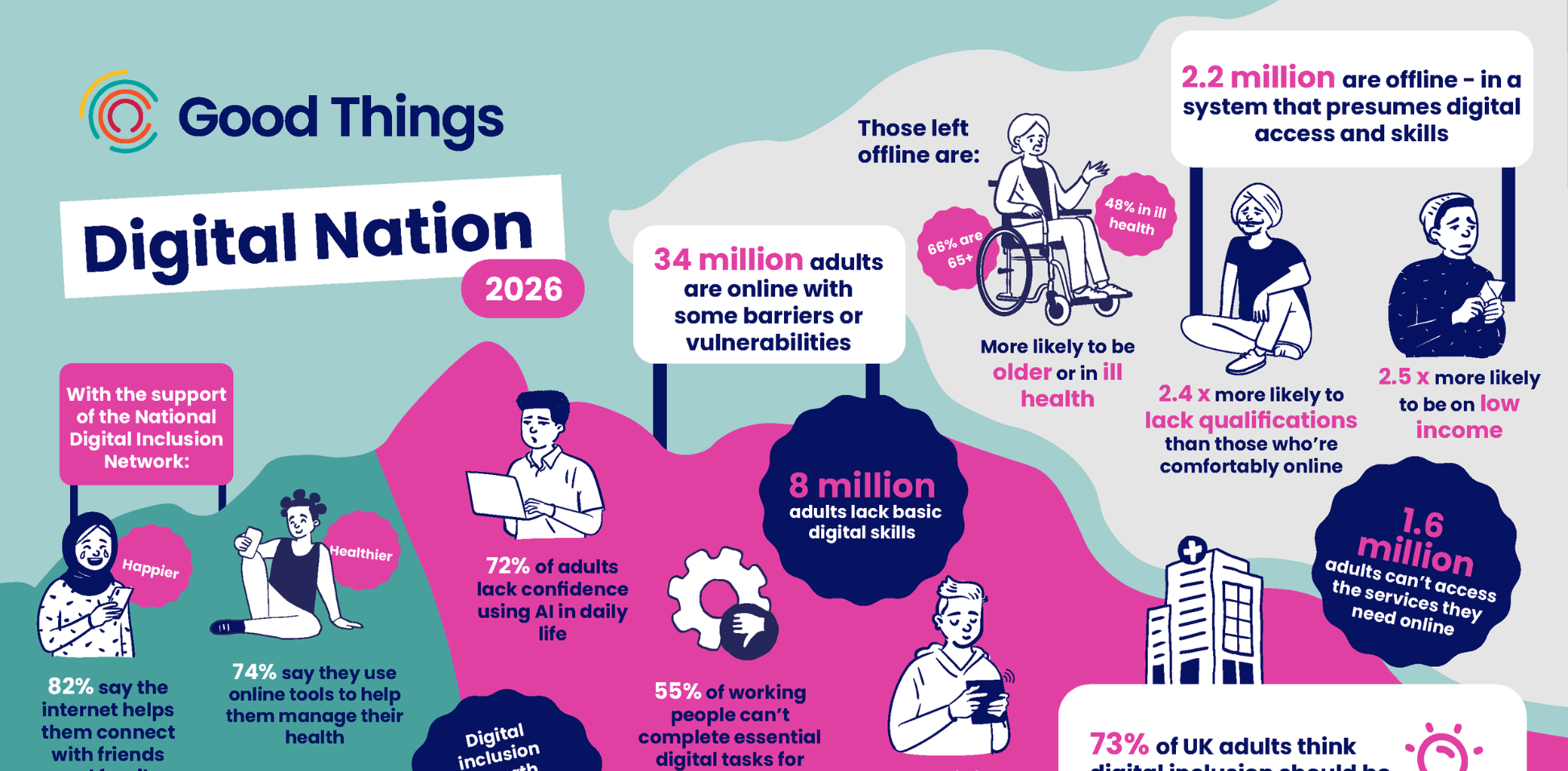
In Digital Nation 2026, we highlighted that 2.2 million people remain completely offline - and that this group skews older, with two thirds (66%) aged 65 or over.
But looking only at the offline population misses the vast majority of people facing digital barriers. If we look across the full spectrum of digital exclusion, we see a different picture:
- 6 in 10 UK adults (62%) face challenges to using digital in their everyday lives. That’s 34 million people who present as “online” on paper, but navigate a far more complex reality of digital barriers and vulnerabilities. These range from a lack of skills or confidence to navigate the internet safely, to affordability challenges - whether that means struggling to pay a monthly broadband bill, or being unable to replace a broken device.
- Three-quarters (75%) of this group are working-age adults. That equates to 26 million people under the age of 65 who are struggling online - in a world where digital skills and access are increasingly essential to everyday life.
- Almost half live on low incomes. Nearly 16 million people in this group live in households earning under £30,000 a year. The close ties between digital and financial exclusion puts these individuals at risk of being priced out of adequate digital access, and unable to unlock all the financial benefits of being comfortably online.
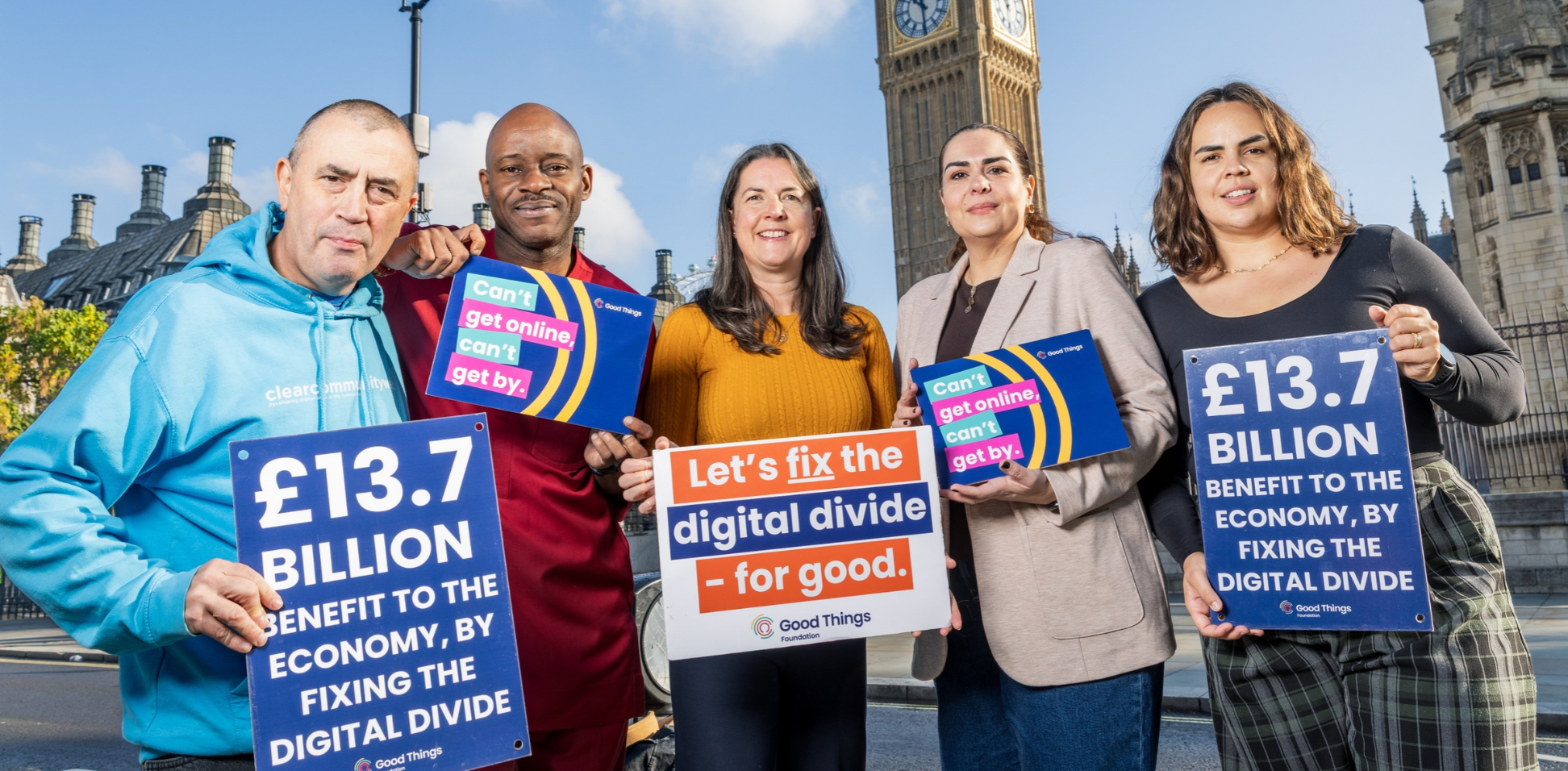
Our data shows that digital barriers are far from being a minority issue: they directly affect millions across the working-age population. Digital inclusion is valued at £13 billion to the UK economy - but without action, these barriers risk stifling employment opportunities and broader economic growth.
Anxiety is growing
Having a device or connection isn't enough if people lack the confidence to use them - and our research also shows that more support is needed here:
- Only half of UK adults (50%) feel confident doing most things they need to do online.
- 40% of adults now worry about being left behind as more services move online - and anxiety is increasing: this figure has risen year-on-year, from 34% in 2025.
This aligns with external research we highlighted in Digital Nation: 72% of adults lack confidence using AI daily, and 55% of working-age adults cannot complete essential digital tasks for work.
As digital-by-default systems and AI become standard across public services, employment, and banking, this confidence gap threatens to widen into a chasm.
What needs to change
We’re urging the Government to launch a multi-year fund to boost digital and AI skills support in communities - building confidence so no one is left behind as technology advances.
The hidden costs: isolation and dependency
At the sharp end of the divide, digital exclusion is forcing people into dependency, and leaving them disconnected. Our research highlights that:
- Over 2.2 million adults depend on others to perform everyday tasks online for them. Again, this isn’t limited to those who are completely offline: 1.5 million of these individuals present as “online” on paper, but aren’t managing to do what they need to independently.
- Around 1 million adults solely depend on public or outside WiFi to get online, without access to home broadband or mobile data.
What needs to change
For those facing the most acute barriers, targeted action is vital. We’re calling on the Government to:
- Cut the cost of connectivity: to support households struggling with data poverty or relying solely on public WiFi, the Government should commit to a new affordability settlement for home broadband, including cutting VAT on social tariffs for the poorest households.
- Support trusted helpers: to protect those who rely on others, support trusted helper schemes - ensuring family, carers, and community networks can safely assist people to navigate online services.
Looking forward
Our data reveals the scale of the problem: digital exclusion reaches far beyond the offline or older population, affecting millions of working-age adults in their daily lives.
Understanding these nuanced barriers and vulnerabilities is precisely why we co-developed the Indicators of Digital Inclusion. By tracking these shifting challenges consistently, we can ensure support reaches people where they need it most and strengthen our evidence to advocate for systemic change - building the confidence and capabilities everyone needs to thrive in an online world.
Find out more
Dig deeper into the data:
These findings draw on Good Things Foundation’s analysis of the 2026 MoneyView survey, conducted by the Money and Pensions Service, which incorporated our Indicators of Digital Inclusion.
- For more headlines from this research, explore our Digital Nation 2026 update
- Or to explore the data yourselves, the dataset is available through the UK Data Service.
Learn more about connectivity barriers and actionable solutions:
- Explore our Data Poverty Lab report: Tackling data poverty: Innovation and collaboration
- Look out for our “Affordable internet access for all” roadmap launching later this week: the result of our collaborative discovery project with Greater Manchester Combined Authority, Autotrader, and the University of Liverpool to address data poverty across Greater Manchester.
What we're doing about it
Find out about what we're asking of Government and why we think it's crucial for digital inclusion to be in the Budget.
You may also be interested in
-
 19/10/2026 Our news
Three-quarters of adults facing digital barriers are of working age, as Good Things calls for Budget action
We’re urging the Chancellor to cut connectivity costs and invest in digital and AI skills, as new research reveals the scale of digital barriers across the UK.
-
 14/07/2026 Research & evidence
Our Digital Nation
What is the state of the UK's digital divide? Each year, Good Things Foundation gathers new facts and stats to reveal the reality of digital exclusion.
-
 18/06/2025 Research & evidence
Tackling Data Poverty: Innovation and collaboration
This report, the latest from the Data Poverty Lab, explores the role of innovation - both technological and systemic - in tackling data poverty. By Dr Sarah Knowles with Dr Emma Stone.