
Ismat's story: How digital access transformed his new life
When 27-year-old Ismat arrived in the UK from Syria just over a year ago, he was eager to learn, adapt, and build a future. However, he quickly hit a wall.
Without a reliable internet connection or a computer, Ismat found it incredibly difficult to navigate daily life in Middlesbrough. Relying solely on a smartphone wasn't enough to help him progress. He struggled to access vital software like Microsoft Word and Excel, leaving him feeling isolated and stuck.
"You feel like you are captured and you cannot access anything," Ismat recalls. "You can’t use your phone for everything. You need a laptop for work and for study. A phone is just for calls or maps."
A turning point with the Hope Foundation
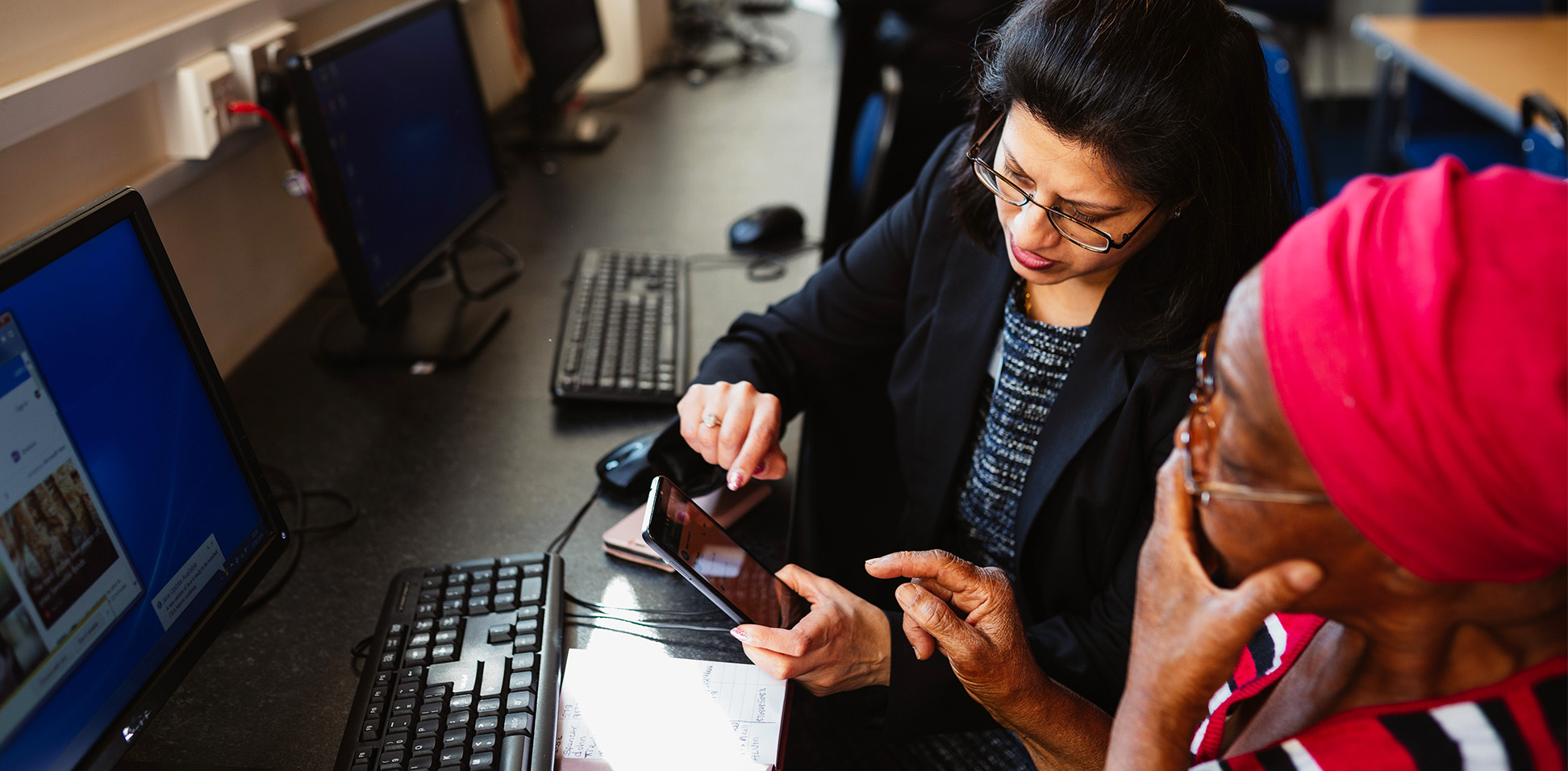
Ismat’s life began to change when he connected with the Hope Foundation, a Middlesbrough-based charity and National Digital Inclusion Network hub. The team helped Ismat get back on track by enrolling him in IT classes and providing him with two vital tools: a laptop and a free SIM card.
The impact was immediate.
"If I didn’t have a SIM card, I couldn’t apply for college or know where it is," Ismat says. "The internet helped me to use maps… I feel more comfortable."
With his new laptop, Ismat customised the settings to fit his needs, proudly stating, "I know everything about it because it’s mine." The technology allowed him to enroll in a local college, use Microsoft Teams to interact with his tutors, practice for exams, and use Duolingo to improve his English. Most importantly, it gave him a sense of belonging:
"I feel happy because it makes it easy to connect to my friends and the community... It’s opened a door to the world."
The reality of data rationing
While the laptop and SIM card transformed Ismat's life, living on limited data presents daily anxieties. To make his data last the full month, Ismat has to carefully ration his internet use, choosing only the most essential tasks.
This digital rationing means he is locked out of vital tools:
- Healthcare: He hasn't been able to download the NHS app. "I didn't think to download it because I'm worried I'll lose data," he explains.
- Education: While he has maintained an impressive 400-day learning streak on Duolingo, his data limits prevent him from using the app's extra learning options.
- Mental health: Ismat uses meditation apps to cope when he wakes up from nightmares. Without the internet, this vital support system disappears.
"If I had unlimited data, it would make it easy," he says. "You don’t need to worry about it, you can just use it and learn more."
The What Works? report
We met Ismat during a series of pilots with Barnsley, Cornwall, and Middlesbrough Councils to test what really works. Now, you can discover proven strategies and actionable takeaways to help your local authority embed digital inclusion into core services.
You may also be interested in
-
 28/05/2026 Our news
Good Things launches National Toolkit to help Councils make digital skills a local priority
Good Things Foundation has released a new national report and practical framework designed to help Local Authorities embed digital inclusion into their services.
-
 28/05/2026 Stories & case studies
Leanne’s story: When connectivity becomes a life-or-death issue
Leanne, a mother in Barnsley, is facing a constant, stressful battle against digital inclusion barriers. Her 16-year-old daughter is a Type 1 diabetic who relies on a digital sensor and pump system. For Leanne, having a reliable internet connection is not a matter of convenience or education - it is literally a matter of life and death.
-
.png) 28/05/2026 Stories & case studies
28/05/2026 Stories & case studiesJulie’s story: Removing the mask of affluence in Cornwall
Julie Hawker, Chief Executive of Cosmic and Trustee of the Good Things Foundation, is witnessing a hidden crisis in the Southwest. While Cornwall is often viewed through the lens of tourism, Julie is highlighting the "disadvantage and suffering" beneath the surface. For many, digital exclusion is no longer just an inconvenience, it is a barrier to basic survival.