
Good Things launches National Toolkit to help Councils make digital skills a local priority
Good Things Foundation has released a new national report and practical framework designed to help Local Authorities embed digital inclusion into their services.
This launch follows the successful Supporting Local Authorities Project, funded by the UK Government’s Department for Science, Innovation and Technology ‘Digital Inclusion Innovation Fund.’
The project created proven, sustainable ways for councils to work with partners to tackle digital exclusion and involved setting up intensive, geographically focused pilot programs across Barnsley, Cornwall, and Middlesbrough. The initiative embedded specialist support via National Digital Inclusion Network partners—Forge Community Partnership (Barnsley), Cosmic (Cornwall), and The Hope Foundation (Middlesbrough)-to thoroughly test new methodologies for integrating digital skills provision across key council services like housing and health.
Practical tools for change
The launch makes two practical, free resources available to councils nationwide:
-
'Strengthening a place-based approach to digital inclusion' (The What Works? Co-Lab report): A summary of the key findings and successful approaches tested across the three pilot areas
-
The Digital Inclusion Partnership Pathway Tool – A free, easy-to-use framework that helps Local Authorities and their partners assess and improve how they tackle digital exclusion in their area.
Making the case for digital skills
Good Things Foundation is using these results and real-life stories to encourage lasting change. These tools provide the clear evidence and roadmap Local Authorities need to move Digital Inclusion from a standalone project to a fundamental part of core services—such as health, housing, and skills - making it a sustainable priority for their communities.
The human impact
The project's success is rooted in the help provided to people on the ground. Leanne, a mother supported by the Forge Community Partnership, the National Digital Inclusion Network partner delivering the project in Barnsley, illustrates the critical need for digital inclusion.
Her 16-year-old daughter is a Type 1 diabetic whose life-saving insulin pump and sensor require a continuous, reliable mobile connection. Leanne constantly battles 'no-spots' in her area, where a momentary loss of signal can have terrifying, life-threatening consequences.
"If it disconnects,” says Leanne, “that sensor is not allowing the pump to know what her body's doing. In 20 minutes, she could be living her best life, dancing and enjoying herself. Twenty minutes later, she could be on the floor, passed out. With no connection, it's life threatening."
Matt O’Neill, Executive Director for Place, Barnsley Council, said:
“We believe digital skills are as important as maths and English, which is why they are built into our plans across health, employment and culture. Through this project, we’ve seen how access to digital skills and reliable connectivity can directly affect people’s health, safety and everyday lives.
"Stories like Leanne’s show this is about much more than technology – it’s about confidence, independence and helping people stay safe and connected.
"We’re proud that Barnsley has helped shape a practical national approach to embedding digital inclusion into core services. Working with Good Things Foundation, we’re creating real opportunities, closing the digital skills gap, and helping more people take part in an increasingly digital world.
"This work strengthens our Tech Town status and supports our ambition to become the UK’s leading digital town, as set out in our Inclusive Economic Growth Strategy.”
Louise Grabham, Director of Adult Social Care, Middlesbrough Council, said:
“Working with Good Things Foundation has provided Middlesbrough Council with a valuable opportunity and framework to guide and strengthen collaboration with other key partners to embed digital inclusion across the borough.
Digital inclusion is not just about providing technology. It is about ensuring Middlesbrough residents have the connectivity, access, skills and confidence they need to navigate an increasingly digital world and fully benefit from digital services.”
Cllr Sarah Preece, Portfolio holder for Tourism, Localism and Planning, Cornwall Council, said:
“We’re pleased to be able to contribute to this toolkit that will support other local authorities across the country to help their residents.
“Making sure people have access to the digital world is one of our top priorities in Cornwall. This work has dovetailed into our own development of a new digital inclusion strategy that builds on work we have already done, including our work with voluntary organisations that has supported thousands of people to get online.”
Here to help
Download the What Works? Co-Lab report and the free Digital Inclusion Partnership Pathway (DIPP) today. Good Things Foundation is ready to help you explore a more strategic approach: engage with us for a free consultation session to start applying the framework, or to explore future advisory partnerships to spread this approach.
Email: partnerships@goodthingsfoundation.org
Contact press@goodthingsfoundation.org for media queries.
Help us reach more digitally excluded people
We want to build a digitally inclusive future, and we need your help. Work with us to ensure everyone can participate in our digital society.
Partnerships with purpose
You may also be interested in
-
 28/05/2026 Stories & case studies
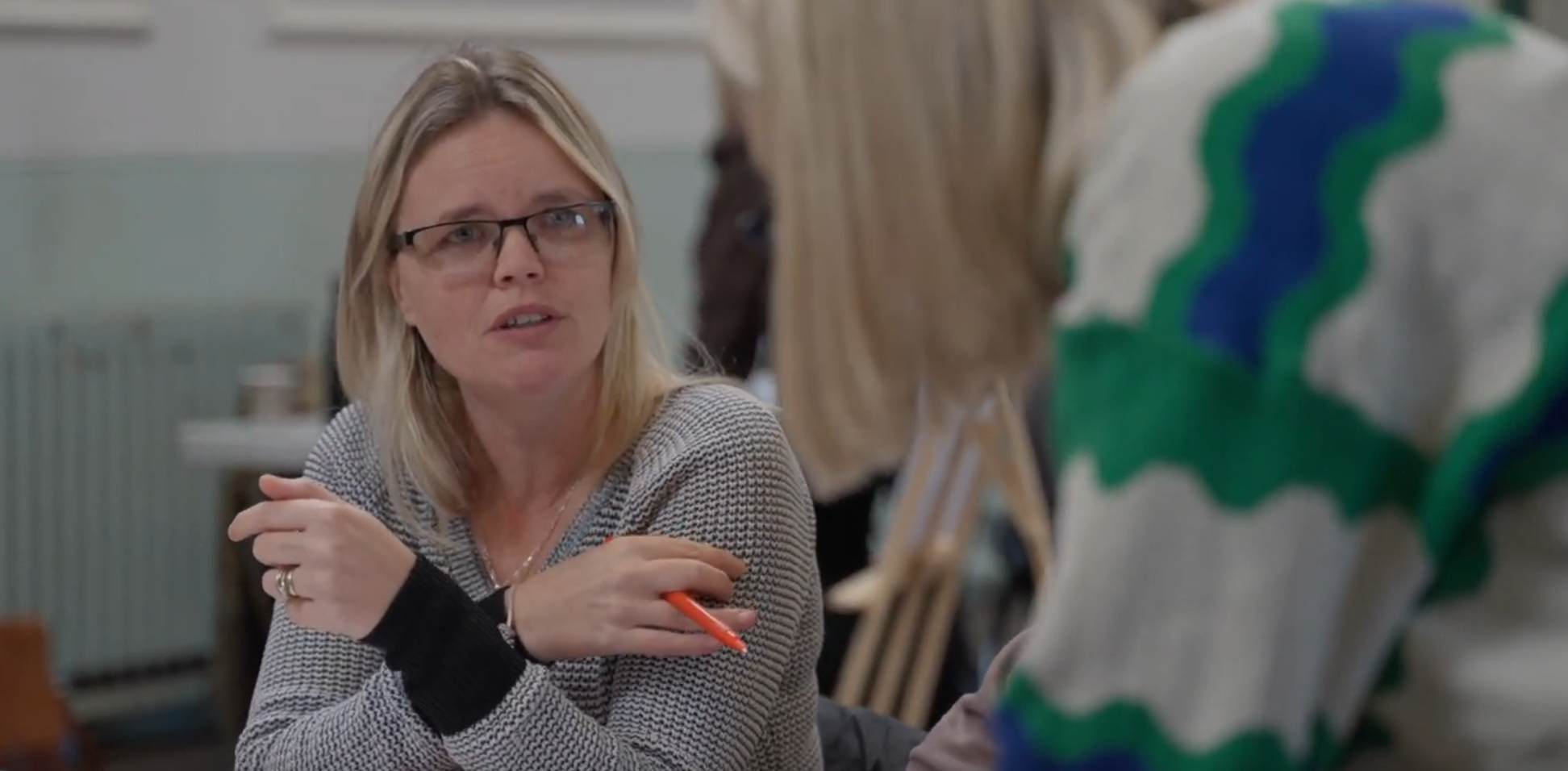
Leanne’s story: When connectivity becomes a life-or-death issue
Leanne, a mother in Barnsley, is facing a constant, stressful battle against digital inclusion barriers. Her 16-year-old daughter is a Type 1 diabetic who relies on a digital sensor and pump system. For Leanne, having a reliable internet connection is not a matter of convenience or education - it is literally a matter of life and death.
-
.png) 28/05/2026 Research & evidence
28/05/2026 Research & evidenceStrengthening a place-based approach to digital inclusion
A What Works? Co Lab Report from Good Things that shares six key lessons and the Digital Inclusion Partnership Pathway tool to help local authorities and cross-sector partners strengthen collaboration and address digital inclusion where they are.
-
.png) 28/05/2026 Stories & case studies
28/05/2026 Stories & case studiesJulie’s story: Removing the mask of affluence in Cornwall
Julie Hawker, Chief Executive of Cosmic and Trustee of the Good Things Foundation, is witnessing a hidden crisis in the Southwest. While Cornwall is often viewed through the lens of tourism, Julie is highlighting the "disadvantage and suffering" beneath the surface. For many, digital exclusion is no longer just an inconvenience, it is a barrier to basic survival.