Strengthening a place-based approach to digital inclusion
A What Works? Co Lab Report from Good Things that shares six key lessons and the Digital Inclusion Partnership Pathway tool to help local authorities and cross-sector partners strengthen collaboration and address digital inclusion where they are.
Foreword
back to top
At Good Things Foundation, our vision is that everyone can participate in a digital society. We see it as a shared responsibility - with government, industry, services, and civil society - to create the opportunities and provide people with the support they need to be digitally included.
In a complex landscape of devolved powers and funding, we believe that strong partnerships in local places can be instrumental in ensuring people get support from people they trust, and in places they feel comfortable.
From our experience of running the National Digital Inclusion Network, we know that community organisations, libraries and local charities are often best placed to support digitally excluded people. We also know that local authorities can play an empowering and strategic role in coordinating digital inclusion across sectors - this is also recognised by the UK government (Digital Inclusion Action Plan: First Steps) and Local Government Association among others.
Funding from the government’s Digital Inclusion Innovation Fund enabled us to partner with a local authority and VCSE partner in each of Barnsley, Cornwall and Middlesbrough to assess the strengths, gaps, and opportunities for digital inclusion partnership working in each place. This What Works? Co-Lab report shares the process we used, and the wider lessons we learned. Our hope is that local authorities, strategic place partnerships, and others from VCSE, public and private sectors will use the Digital Inclusion Partnership Pathway tool we’ve created to foster or strengthen collaborative working where they are.
For Good Things Foundation, strengthening digital inclusion infrastructure in places, and working in partnership to achieve this, is a priority in our new strategy. If this is a priority for you too, we’d love to hear from you.
Dr Emma Stone
Director of Evidence and Engagement, Good Things Foundation
Acknowledgements
We are deeply grateful to all the partners who came on this journey with us - Barnsley Council and Forge Community Partnership; Cornwall County Council and the Isles of Scilly, and Cosmic; Middlesbrough Council and Hope Foundation; and Better Places CIC. The project on which this report is based was made possible with support from the government’s Digital Inclusion Innovation Fund.
Executive summary
back to top
Digital exclusion touches nearly every aspect of residents' lives, including employment, education, health services, and social connection. Yet no single public service is responsible for digital inclusion. Locally, this means that local authorities are often best placed to lead and coordinate partners in ways that are strategic, embed digital inclusion in local strategies and services, and foster cross-sector collaboration, especially with the voluntary and community sector.
Funded by the Digital Inclusion Innovation Fund, this 6 month project explored how to strengthen approaches in three areas. Good Things Foundation and Better Places CIC partnered with Barnsley Council and Forge Community Partnership; Cornwall Council and Cosmic; and Middlesbrough Council and Hope Foundation. Using Good Things Foundation’s Digital Inclusion Partnership Pathway tool, we assessed the strengths and opportunities for digital inclusion partnership working. This report shares the wider lessons learned.
Six lessons for strengthening digital inclusion partnerships in places
- Local authorities are well-placed to foster a collaborative approach. This involves embedding digital inclusion as "business as usual" within local strategies and partnerships. Taking a system-wide approach helps to strengthen digital inclusion infrastructure, and move it beyond a collection of separate initiatives.
- Anchor strategic planning in lived experience: Resident engagement reveals why people are excluded (often a combination of barriers) and what support they value (often tailored support in trusted community settings). When strategic planning is informed by residents’ voices, local strategy becomes "real".
- Use the Partnership Pathway tool to structure reflection: Bringing partners together to reflect on the local digital inclusion landscape improves their ability to collaborate and understand their respective roles. The tool works best as a structured starting point to spark conversation about local partnership working.
- Establish visible leadership and system-wide coordination: Local areas may have a wealth of activity that is invisible, or difficult for residents to navigate. To move to a more cohesive system of support, local authorities need a central forum for strategic alignment and priority setting, paired with operational digital inclusion networks or communities of practice, and mapped referral pathways.
- Engage the VCSE sector as vital partners: The VCSE sector holds the trusted relationships needed to engage and support many residents. Providing sustained, high-quality support requires sustained funding. Local authorities and others can explore ways to incorporate digital inclusion into commissioning or procurement frameworks, and leverage social value from wider contracts.
- Align cross-sector partners around a shared vision for digital inclusion. Digital inclusion is not the responsibility of a single team or sector. By aligning around a shared vision, combining data with lived experience and local insight, establishing clear governance, and supporting VCSE partners, local authorities can build a more resilient, cross-sector system of support for all residents.
Good Things Foundation’s Digital Inclusion Partnership Pathway tool
back to top
| Digital Inclusion Partnership Pathway: A checklist for success in places |
|---|
Local partners agree on a shared vision and set of priorities for digital inclusion across a place. They are owned and acted on together.
Leadership, governance and resources are coordinated across the system to support digital inclusion. Funding is long-term rather than project based and contributes to the convening of local partners.
Partners identify, understand and prioritise together the people, places and communities most at risk of digital exclusion. This is based on a shared understanding, informed by data and local lived experience.
Partners understand and evidence impact. They use learning to improve digital inclusion activity and communicate progress over time. This includes communicating with residents about what is available. |
The full tool and toolkit is available to download. We’d love to hear from you if you are interested in using it, or have used it and want to share feedback so we can learn and improve.
Introduction
back to top
Good Things Foundation was funded through the Department for Science, Innovation and Technology’s (DSIT) Digital Inclusion Innovation Fund to work with partners in local authority areas Barnsley, Cornwall and Middlesbrough.
In Barnsley Good Things Foundation and Better Places CIC worked with Barnsley Council and Forge Community Partnership. In Cornwall with Cornwall Council and Cosmic and in Middlesbrough with Middlesbrough Council and Hope Foundation. We worked together to assess and explore where and how to strengthen their respective approaches to making digital inclusion a sustained local priority.
We used Good Things Foundation’s Digital Inclusion Partnership Pathway tool, originally developed to assess partnerships working between local authorities and primary care, to assess the strength of cross-sector partnerships for digital inclusion in each place, and to enable local partners to identify next steps for a collaborative, place-based approach to digital inclusion.
What do we mean by a collaborative, place-based approach to digital inclusion?
back to top
- Coordinating effort around a shared vision. Partners across a locality or region work together around a shared vision and coordinate action to address digital exclusion. Effective approaches have clear leadership and governance arrangements. There is often a dedicated role or team responsible for convening partners, connecting activity across partners, and maintaining momentum.
- Making digital inclusion ‘business as usual’. Longer-term sustainability depends on embedding digital inclusion as a cross cutting priority within place-based strategies and plans and cross-sector partnerships.
- Ensuring equitable access. Putting people at the heart of place-based approaches helps to ensure that people experiencing digital exclusion have the combination of accessible internet, adequate equipment, and skills and confidence to engage safely with the online world.
Introducing the Digital Inclusion Partnership Pathway tool
back to top
Building on our and others’ experience over many years, we identified four domains for success that can help partners to strengthen digital inclusion infrastructure, and embed this as a sustained priority. These are used in the tool. The tool is structured around four stages of maturity: Emergent → Engaged → Established → Embedded.
| Digital Inclusion Partnership Pathway: A checklist for success in places |
|---|
Local partners agree on a shared vision and set of priorities for digital inclusion across a place. They are owned and acted on together.
Leadership, governance and resources are coordinated across the system to support digital inclusion. Funding is long-term rather than project based and contributes to the convening of local partners.
Partners identify, understand and prioritise together the people, places and communities most at risk of digital exclusion. This is based on a shared understanding, informed by data and local lived experience.
Partners understand and evidence impact. They use learning to improve digital inclusion activity and communicate progress over time. This includes communicating with residents about what is available |
About this project
back to top
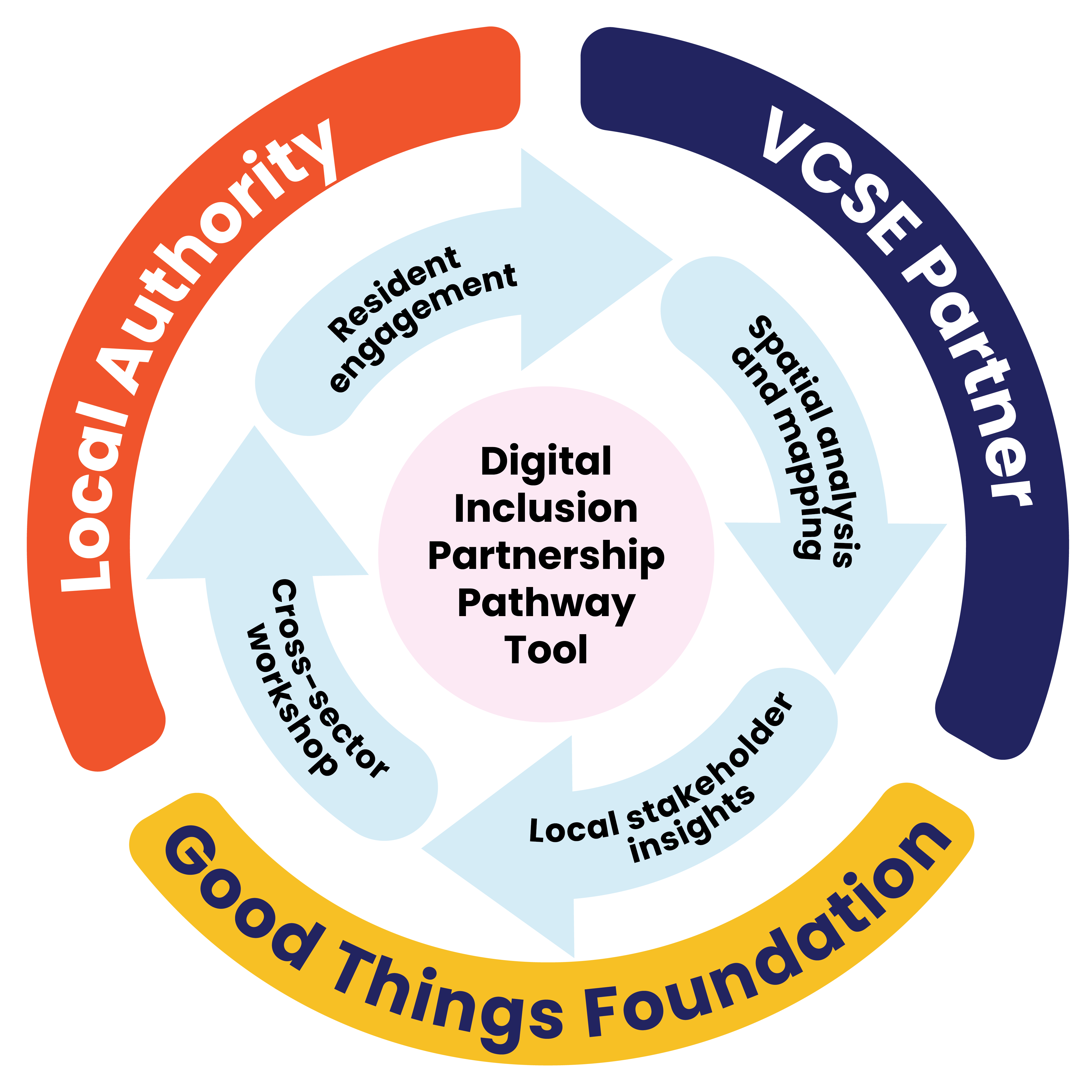
The five month project consisted of a series of activities designed to understand local needs, assess the current maturity of cross-sector partnership working for digital inclusion, and co-create recommendations for next steps in each area.
Show image description Hide image description
The diagram utilises a colour palette of orange, dark blue, yellow, and light blue against a white background. At the exact center of the diagram is a light pink circle containing the text 'Digital Inclusion Partnership Pathway tool'.
Surrounding the central pink hub is a continuous, clockwise circular loop made of four wide, light-blue arrows. Overlaid on each arrow is a light blue, pill-shaped bubble containing text that represents a specific collaborative activity or method:
-
Top Arrow: "Resident engagement"
-
Right Arrow: "Spatial analysis and mapping"
-
Bottom Arrow: "Local stakeholder insights"
-
Left Arrow: "Cross-sector workshop"
The outermost layer of the diagram consists of three thick, curved, segmented borders that frame the inner loop. Each segment represents a key partner group, written in bold, uppercase text:
-
Top-Left Segment (Orange): "Local Authority"
-
Top-Right Segment (Dark Blue): "VCSE Partner"
-
Bottom Segment (Yellow): "Good Things Foundation"
The outer segments show that the Local Authority, VCSE Partners, and the Good Things Foundation are the primary pillars supporting the framework. Together, they continuously drive the four inner processes (Resident engagement, Spatial analysis and mapping, Local stakeholder insights, and Cross-sector workshops) to feed directly into and utilize the central Digital Inclusion Partnership Pathway Tool.
- Resident engagement: In each place, two resident engagement workshops, planned and facilitated by community partners and supported by Good Things Foundation staff, captured people’s lived experience of barriers to digital inclusion, effectiveness of support, and future priorities.
- Spatial analysis: We used national datasets and Good Things Foundation’s data to map where residents at the highest risk of digital exclusion were likely to be living, and the extent to which these communities are served by organisations in Good Things Foundation’s National Digital Inclusion Network.
- Stakeholder interviews: We held semi-structured interviews with council officers, VCSE partners and wider stakeholders from public and private sectors. These insights were triangulated with local intelligence to identify the strengths and opportunities for strengthening digital inclusion partnership working.
- Cross-sector workshops: Three workshops were delivered in each area (two in person and one online) with a range of partner organisations. Building on findings from the previous activities, the workshops were a space for partners to explore challenges, opportunities, and identify next steps for strengthening collaborative approaches to digital inclusion in their places.
- Area reports and recommendations: Each local authority area received a report summarising the findings and suggesting recommendations.
Additionally, the project funding enabled us to:
- Support peer learning across areas: Two action learning sessions brought project partners from Barnsley, Cornwall and Middlesbrough together to share insights, reflect on emerging findings, and identify practical approaches that could be applied across different places.
- Improve the Partnership Pathway tool: Through using the tool in practice and with a range of partners, we identified where and how it could be improved. The revised tool, the Digital Inclusion Partnership Pathway, is published and freely available for local authorities and others to use to develop their partnership working and strengthen digital inclusion infrastructure.
Effective, sustained and collaborative digital inclusion partnerships in places are vital to address digital exclusion in communities. National and regional funding is needed to support and sustain effective place-based approaches.
Step 1: Resident engagement
back to top
Understanding the needs and views of residents
back to top
In each place we worked with a community organisation to organise two resident engagement events. To ensure that the whole project was grounded in the views and experiences of local people, these events were the first phase of the project. We used these events to understand:
- Local barriers to people participating in a digital society.
- Consequences of digital exclusion on everyday life.
- Experiences of local digital inclusion support.
- Types of support residents felt would make the biggest difference locally.
Resident engagement: what we learned
back to top
Although the three areas differ in geography and local context, residents across Barnsley, Cornwall and Middlesbrough described many similar experiences of digital exclusion. Residents consistently highlighted that digital exclusion is rarely about a single issue; it reflects a combination of skills, confidence, affordability, connectivity and trust.
Local barriers to people participating in a digital society
- Lack of confidence and skills: this emerged as the most significant barrier, often discouraging people from using digital services even when they recognised the potential benefits.
- Affordability and connectivity: in Cornwall, poor connectivity and uneven signal were significant issues In Barnsley and Middlesbrough residents emphasised the cost of data, devices or broadband. Across all areas, awareness and uptake of social tariffs appeared low.
Consequences of digital exclusion on everyday life
Residents described how digital exclusion impacts their lives:
- Difficulties accessing healthcare services.
- Challenges managing finances.
- Barriers to searching for and securing jobs.
- Difficulties interacting with public services.
- Reduced independence due to reliance on family members, friends or support workers.
- Increased isolation and frustration because they can’t access services online.
Experiences of local digital inclusion support
Residents consistently valued local, trusted sources of support, particularly libraries, community organisations, and council programmes. Where people had received one-to-one help, access to devices or tailored skills training, this often made a meaningful difference to confidence, independence and access to services. Learning linked to practical tasks or personal interests were effective in helping people engage. For example, in Middlesbrough the Rekindle programme uses ancestry clubs and digital walks to develop confidence and skills.
Types of support residents felt would make the biggest difference locally
Residents talked about accessible, community-based digital support, delivered by trusted organisations and tailored to people’s abilities and circumstances. They told us that they would most expect support to be provided in:
- Local community organisations
- Libraries
- Through social services
- Through council services
- Local schools and colleges
- Job centres
- Churches (in rural areas in Cornwall)
- GP surgeries and hospitals.
| Case study: Joy |
|---|
|
Joy, a resident of Barnsley, is witnessing the effects of digital exclusion firsthand. She speaks out about her struggles with digital exclusion, and highlights the countless vulnerable people being pushed to the brink by the compulsory shift to 'digital-first' essential services. Joy highlighted a critical problem: key services are abandoning non-digital options, creating insurmountable barriers for those who lack the skills, devices, or access. Essential services like checking a bank balance or booking a doctor’s appointment are now almost exclusively online:
|
Resident engagement: what works?
back to top
Work with a trusted community organisation
Community organisations hold the trusted relationships needed to engage local people to participate in these activities. Whilst Good Things Foundation staff supported the delivery of events, community partners took the lead in engaging local people and delivering activities designed to understand residents’ views and experiences. Community partners’ expertise and local knowledge was vital.
Allow at least six weeks for engaging residents
The five month delivery window (November 2025 to March 2026) allowed little time to organise and deliver the resident engagement events. They all needed to take place in December 2025 to inform the workshops planned for January 2026. Organising these in the run up to Christmas and winter weather was challenging. Whilst we were successful, it would have been better to allow at least 6 weeks to engage local residents, especially when engagement includes rural areas.
Storytelling that is empowering
We gathered video case stories from residents in each place. The team at Good Things Foundation worked with a videographer. If done sensitively, recording residents’ stories can be empowering for them.
“I thought the whole process has been handled really well. I enjoyed doing the interview and felt listened to. It's been good to take part in. I like being a movie star!”
- Cornwall resident
Provide incentives for residents
In addition to refreshments at engagement events, we offered residents a voucher to thank them for their time and for sharing their views.
Feedback findings to residents
In March 2026, after we had delivered all the other project activities, community partners provided residents with feedback about how their views had informed the rest of the project and the recommendations we have made to local partners. Feedback from these events was very positive.
“They were happy there was a plan in place to support digital inclusion at a higher level and felt listened to.”
- Lauren Cummins, Independent Living and Digital Coordinator, Middlesbrough Council
"....overwhelmingly the thing that comes through is how valued they feel because they've actually had a voice... They've told a personal story that resonates across so many different factors of life"
- Neil Spencer, Chief Executive, Forge Community Partnership, Barnsley
Step 2: Spatial analysis and mapping
back to top
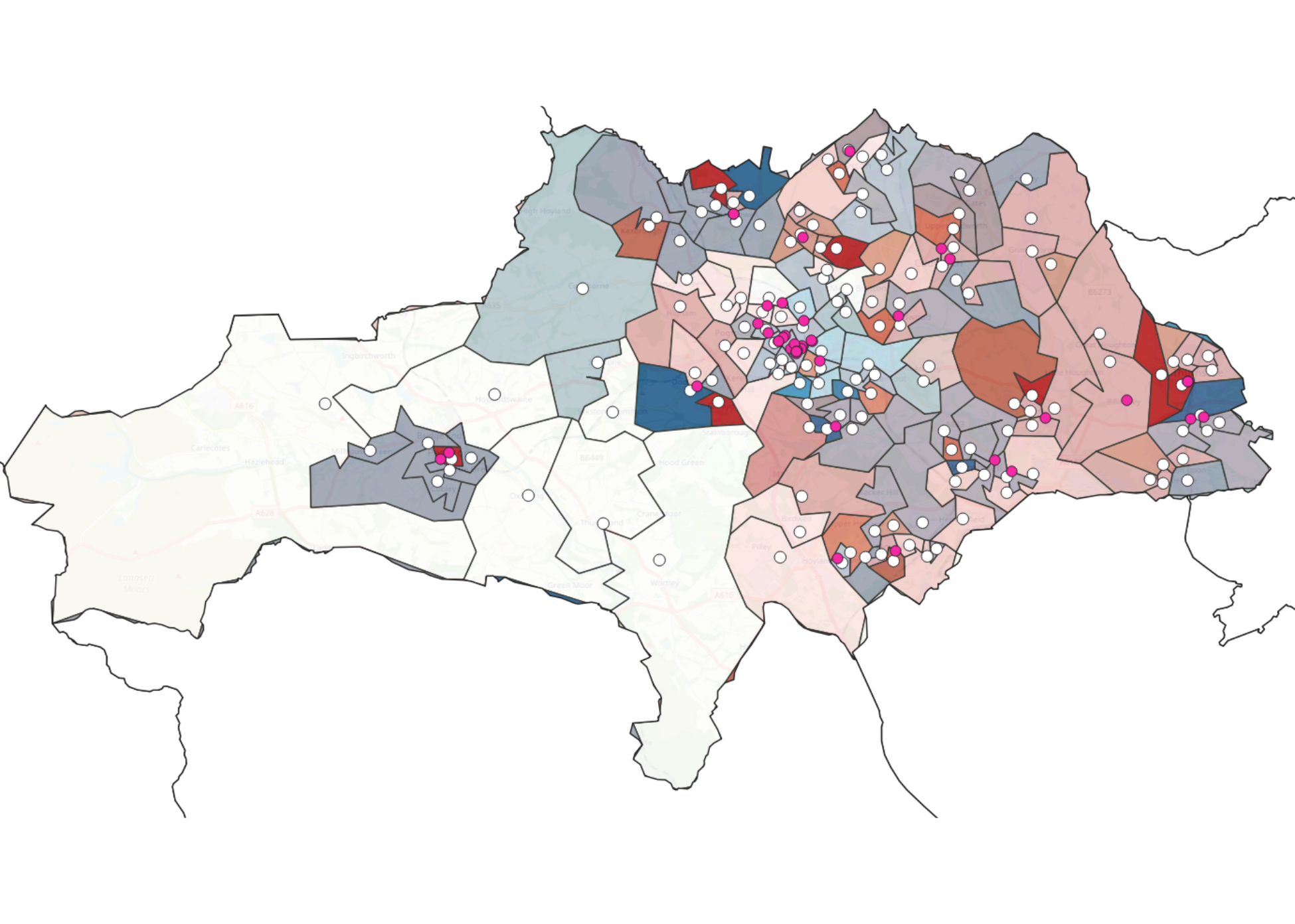
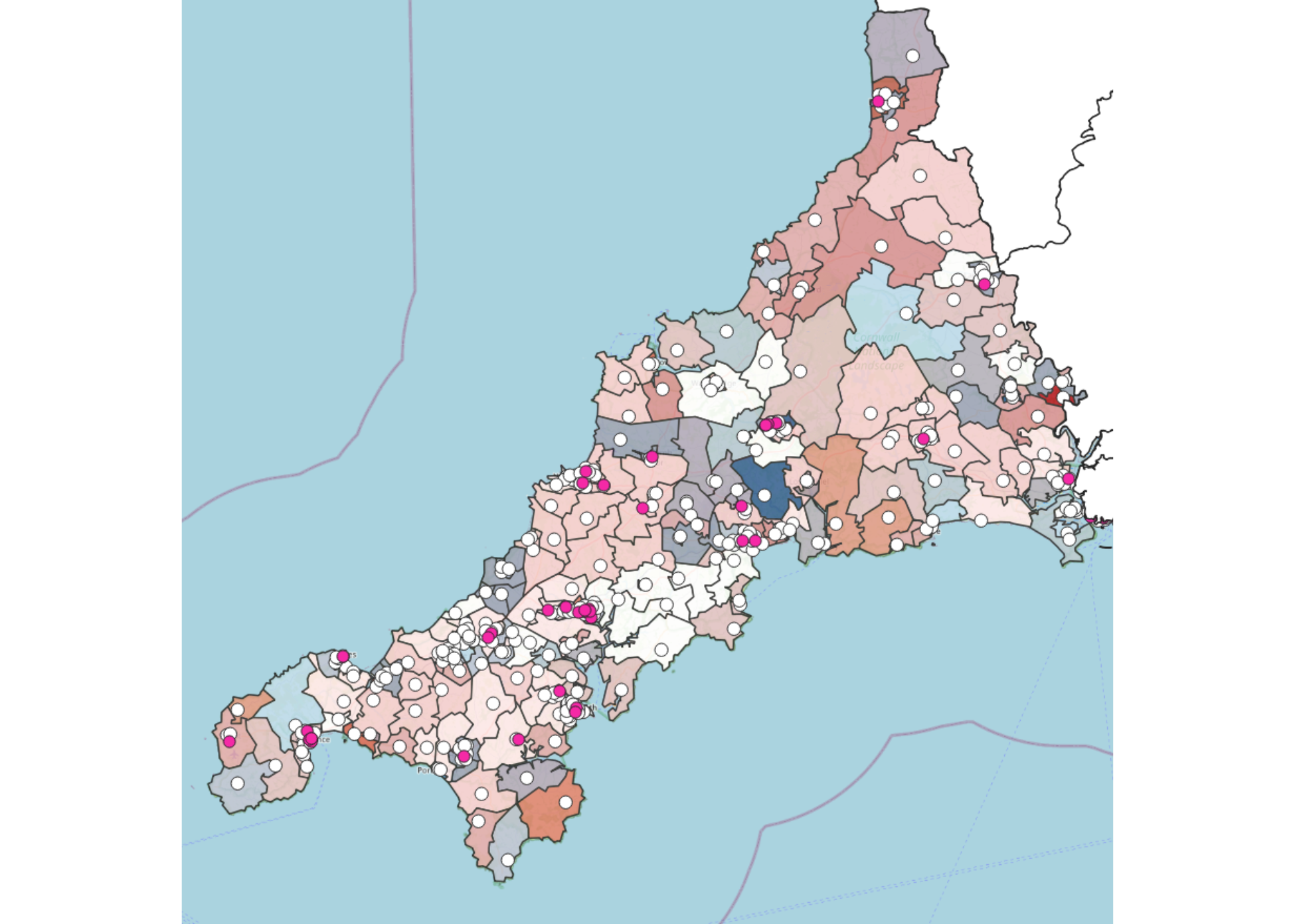
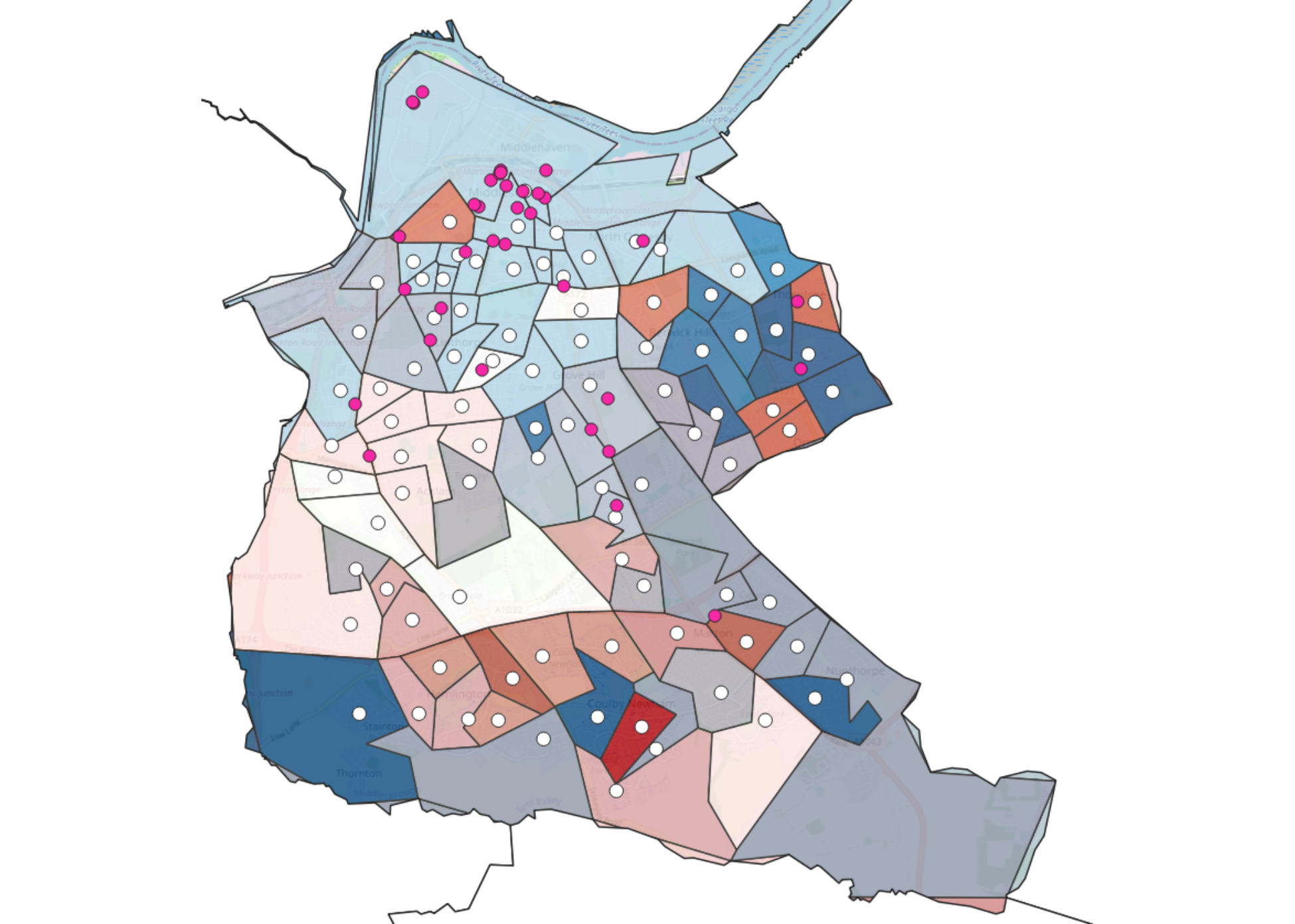
In addition to understanding the views and experiences of residents, we wanted to understand where residents at the highest risk of digital exclusion were likely to be living, and the extent to which these communities are served by organisations in Good Things Foundation’s National Digital Inclusion Network. We used national datasets and tools and mapped organisations against the geographies of each local authority area. (See Appendix 2 for examples).
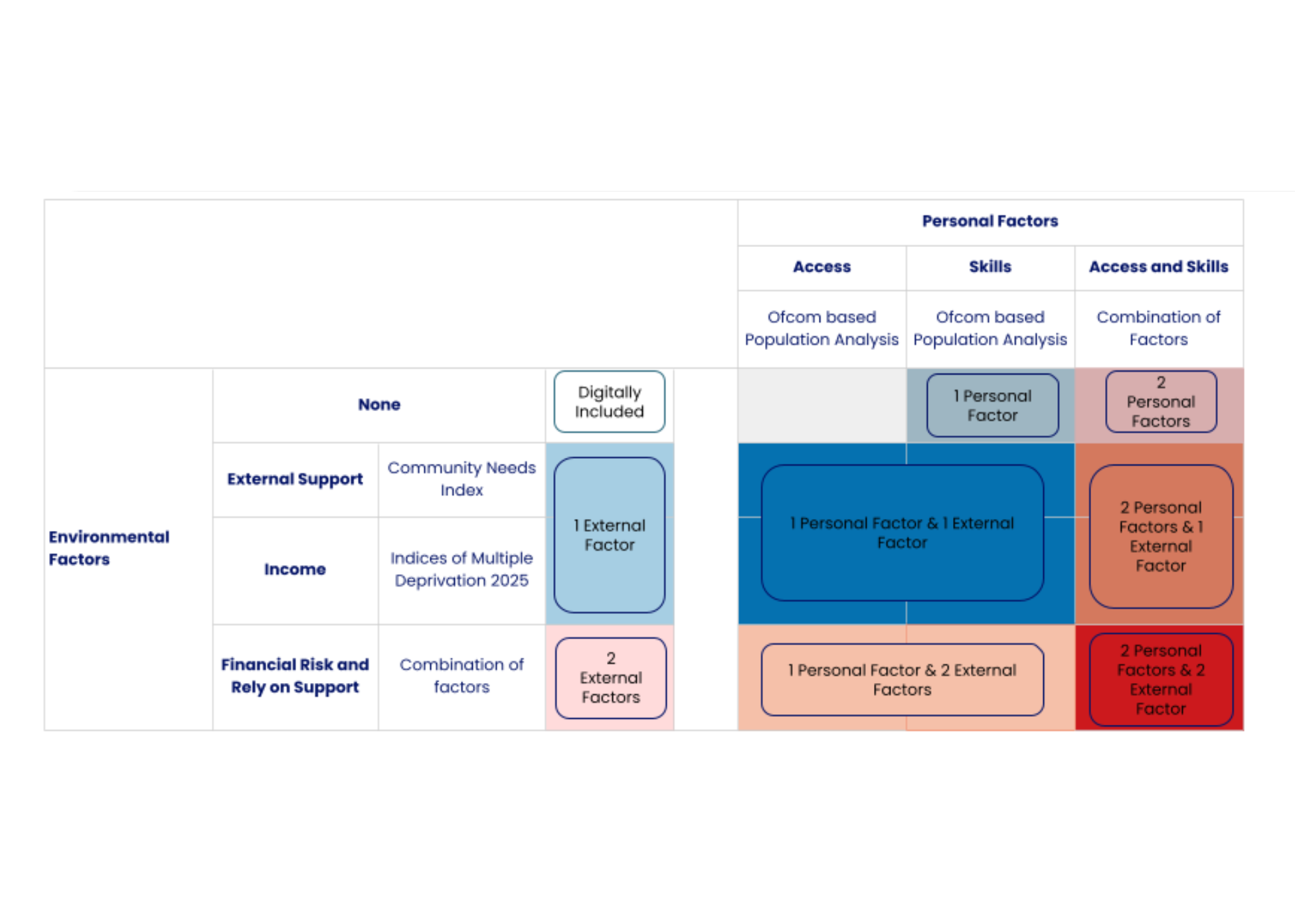
Figure 1 below sets out the analytical framework used for the data analysis. It considers both personal factors (such as access and digital skills) and environmental factors (including income and access to local support).
Show image description Hide image description
This image is a matrix-style diagram explaining how different personal and environmental factors overlap. The colours in the matrix match to the colours on the maps.
The matrix is divided into four rows and four columns. The y-axis, labelled "Environmental Factors" has four categories, each corresponding to a row. From top to bottom:
- None
- External Support (measured by Community Needs Index)
- Income (Measured by the Indices of Multiple Depreciation)
- Financial Risk and Rely on Support (combination of the above)
The x-axis, labelled “Personal Factors ”, has 3 categories, each corresponding to a column. From left to right:
- Access (measured by Ofcom based population analysis )
- Skills (measured by Ofcom based population analysis)
- Access and Skills (combination of the above)
The datasets used were:
- The Digital Exclusion Risk Index (DERI), developed by the Greater Manchester Combined Authority, visualises the likelihood of digital exclusion for every Lower Super Output Area (LSOA) in England and Wales (and every data zone in Scotland). It brings together indicators associated with digital exclusion, e.g. age, disability, deprivation, broadband connectivity, poverty and skills.
- The OCSI Community Needs Index, which measures the social and cultural factors that influence people’s outcomes, including access to civic assets such as libraries and community spaces.
- Broadband availability data from Ofcom, which provides insight into the availability of digital infrastructure across different areas.
- Population access and confidence measures developed by Good Things Foundation, which combine multiple indicators to identify areas where residents may face several overlapping barriers to digital participation.
Combining datasets helped identify where digital exclusion is likely concentrated. Insights of local partners were vital to help interpret and validate the analysis.
Spatial analysis and mapping: what we learned
back to top
The combination of spatial analysis, mapping, and local knowledge and insights helped to build a shared understanding of risks and provision in the three areas.
Barnsley
- A geographic digital divide: Neighbourhoods with highest digital exclusion risks are in the east, aligning with longstanding socioeconomic inequalities.
- Concentration of support: Digital inclusion support is concentrated in densely populated areas, leaving rural and former coalfield communities with more limited provision.
- Distinct local challenges: Former colliery communities face high exclusion driven by affordability, lower skills, and mistrust; semi-rural areas struggle with slower connectivity; and large peripheral estates face a combination of disadvantage and a lack of accessible local provision.
Cornwall
- Diverse community risks: The mapping, which complements the University of Plymouth’s Broadband Digital Deprivation Index, shows that the highest risk areas span distinct community types.
- Deprivation versus infrastructure: In coastal and post-industrial communities, risk is tied to higher deprivation, affordability challenges, and poorer health outcomes. In rural and isolated areas, exclusion is primarily driven by infrastructure barriers such as limited broadband, fewer local services, and a heavy reliance on public transport.
- Hidden exclusion: Smaller pockets of high digital exclusion risk exist and are concentrated within otherwise less deprived neighbourhoods.
Middlesbrough
- Centralised provision: Provision is concentrated in central areas, which creates barriers for people who rely on public transport or live further away.
- Neighbourhood-specific needs: Different areas experience exclusion in distinct ways. For example, deprived areas like Thorntree and Berwick Hills have a high need for devices and mobile data, whereas areas like Newport, which have high demographic diversity and many residents with English as a second language, need connectivity for education and employment.
- Outreach challenges: Reaching some communities is difficult, meaning trusted local organisations and residents are critical for engagement.
Spatial analysis: what works?
back to top
Combine data sets with local insights
Combining data analysis with local knowledge from community organisations and insights from people with lived experience helps build a rich understanding of the kind of support which communities may need, and ensures that responses to digital exclusion reflect the diverse and overlapping barriers people face.
Recognise the limitations of spatial analysis
Mapping identifies areas where digital exclusion may be concentrated, but people may still face barriers regardless of where they live. Personal or household factors such as age, disability, health conditions, income, education, language, culture and confidence can all influence ability or willingness to engage online. So people in areas that appear relatively well served by digital inclusion support may still face barriers.
"The data is saying that it's about skills or it's about connectivity and they're the solutions that we need... But actually what you see on the ground is [a need for] personalised one-to-one support. How do I do what I need to do on the device that I've got? How do I make this app work?...”
- Katie Heard, Head of Research and Data Insights, Good Things Foundation
Step 3: Local stakeholder insights
back to top
Seek a range of views from local stakeholders
back to top
In each area, we carried out 5-8 interviews with stakeholders to understand the current maturity of local partnership working for digital inclusion. We framed the interviews using the Partnership Pathway tool to build a picture of partner alignment around:
- Shared vision, purpose and priorities
- Shared leadership, governance and resources
- A shared approach to reaching digitally excluded people, communities and places
- A shared approach to impact, learning and communication.
Stakeholder interviews: what we learned
back to top
Barnsley
- We heard that Barnsley had established the foundations for partnership working and a shared understanding ("Engaged" in vision, communication), while the infrastructure to coordinate this (such as leadership, governance, measuring impact) were "Emergent" or "Emergent/Engaged".
Cornwall
- We heard that Cornwall had established strong strategic foundations for partnership working on digital inclusion ("Established" for vision), while the operational infrastructure for things like measuring impact were more "Emergent/Engaged".
Middlesbrough
- We heard that Middlesbrough was making its strongest progress in practical delivery and accessible support with digital inclusion in communities ("Engaged/Established"), while system-wide coordination and governance were more "Emergent".
Stakeholder interviews: what works?
back to top
Interview a wide range of stakeholders
Interviews should target a wide range of stakeholders from across the local system (the VCSE, public and private sectors), including people who lead council-run digital inclusion initiatives, and staff at different levels of seniority in partner organisations. This helps to capture both the strategic and operational understanding of partnership working. Role seniority and tenure are important to build an accurate picture of the wider collaboration context.
Allow time for securing senior stakeholder interviews
Securing time in the diaries of senior stakeholders requires advance planning; this was challenging in the tight delivery timeframe of this project. Senior stakeholder insights are an important way to understand the wider context in a local place.
Step 4: Cross-sector workshops
back to top
Creating the space for partners to reflect together
back to top
In each place we organised two in-person, cross-sector strategic workshops to:
- Share with local stakeholders what we had heard from residents.
- Reflect our initial assessment of digital inclusion partnership working, drawing on the spatial analysis and local stakeholder interviews.
- Shape priorities and next steps to strengthen cross-sector collaboration.
Organising two workshops per place allowed us to engage with as many local partners as possible. We then organised an online workshop for each place to play back what we had heard and make suggestions for area recommendations.
Cross-sector workshops: what we learned
back to top
In Barnsley and Middlesbrough we used the Partnership Pathway tool, and in Cornwall we used the priorities in the Cornwall and Isles of Scilly Digital Inclusion Strategy 2025-2030, as the starting point for conversations about what partners wanted to focus on next together. Their priorities are summarised in the table below.
| Priority | Barnsley | Middlesbrough | Cornwall |
|---|---|---|---|
| Strengthening leadership and coordination for digital inclusion | Yes | Yes | Yes |
| Developing a shared evidence base for digital inclusion | Yes | Yes | Yes |
| Creating opportunities for ongoing learning and improvement/ developing a community of practice | Yes | Yes | |
| Improving the accessibility and visibility of digital inclusion support | Yes | ||
| Securing sustainable funding and resources for digital inclusion | Yes |
Leadership and coordination
Partners in each place agreed that a central forum for strategic alignment and priority setting is vital for a system-wide approach. Barnsley partners suggested this needs to sit with the Inclusive Economy Board. In Cornwall, responsibility already sits with the Cornwall and Isles of Scilly Leadership Board. A network or community of practice was also felt important. This was recommended for Barnsley and Middlesbrough; Cornwall intended to reinvigorate the iCornwall Group, an action identified in the University of Plymouth’s report for Cornwall.
Developing a shared evidence base
Building a unified evidence base by mapping and combining local data, national datasets, and qualitative insights from lived experience was recommended. This involves adopting shared frameworks and common indicators so information can be compared and progress tracked consistently. Coordinated intelligence informs decisions about priority groups, future investments, and targeting support.
Creating opportunities for ongoing learning
In Barnsley and Middlesbrough, forming a local digital inclusion network or community of practice was identified as a way to foster cross-sector learning. Engagement with external digital inclusion networks, such as the Local Government Association’s Digital Inclusion Network, was also recommended.
Improving accessibility and visibility
Improving the visibility of digital inclusion support was identified as important in all three places, and prioritised in Cornwall. Mapping local activities and potential referral routes can improve visibility and access to available services. In Cornwall, a local digital helpfinder tool is already underway to meet this challenge.
Securing sustainable funding
The VCSE sector often provides digital inclusion support with no or low levels of funding, or very short term funding, but this is not a sustainable approach to supporting residents. Possible solutions included incorporating digital inclusion into commissioning or procurement frameworks to leverage social value, and creating longer-term funding pots for digital inclusion support.
Cross-sector workshops: what works?
back to top
“...having activity on the ground in the form of the workshops made the stuff we were talking about in the development of the strategy real. It validated the things that we had been talking about in a hypothetical sense”
- Chloe Rickard, [former] Future Skills Lead, Cornwall Council
Resident engagement grounds strategic planning
Playing back what we heard from residents helped cross-sector partners to develop their strategic priorities together. When workshop participants completed pre- and post-event surveys, the highest score was understanding the impact of digital exclusion on local residents.
Local partners value the opportunity to reflect together
Bringing partners together to align thinking around digital inclusion, rooted in data and residents’ experiences, and to explore ways to collaborate as a group was valued. Participant feedback showed the highest increases in people feeling more able to collaborate with other local partners to address digital inclusion.
How to use the Digital Inclusion Partnership Pathway tool
As facilitators, we needed to be clearer about how we were using the Partnership Pathway tool. We were using the tool as a structured starting point for reflection, helping partners to build a shared understanding, identify local strengths and gaps, and agree practical priorities for action. It was important to reiterate that our aim was not to assess the quality of local provision, but to understand local partnership working, and to support local partners to identify how they could strengthen collaboration at a strategic and operational level.
“When you first presented the initial maturity assessment, a few organisations were a bit taken aback at the perception that they weren't mature - but realised through conversation that the assessment was about the system, not individual players.”
- Chloe Rickard, [former] Future Skills Lead, Cornwall Council
Tips for using the Digital Inclusion Partnerships Pathway
back to top
Local authorities and place-based partnerships can follow a similar process and use the Digital Inclusion Partnership Pathway tool to assess the strength of their local or regional partnership working for digital inclusion. If you use the tool or would like support, do get in touch at partnerships@goodthingsfoundation.org
Show image description Hide image description
The diagram utilises a colour palette of orange, dark blue, yellow, and light blue against a white background. At the exact center of the diagram is a light pink circle containing the text 'Digital Inclusion Partnership Pathway tool'.
Surrounding the central pink hub is a continuous, clockwise circular loop made of four wide, light-blue arrows. Overlaid on each arrow is a light blue, pill-shaped bubble containing text that represents a specific collaborative activity or method:
-
Top Arrow: "Resident engagement"
-
Right Arrow: "Spatial analysis and mapping"
-
Bottom Arrow: "Local stakeholder insights"
-
Left Arrow: "Cross-sector workshop"
The outermost layer of the diagram consists of three thick, curved, segmented borders that frame the inner loop. Each segment represents a key partner group, written in bold, uppercase text:
-
Top-Left Segment (Orange): "Local Authority"
-
Top-Right Segment (Dark Blue): "VCSE Partner"
-
Bottom Segment (Yellow): "Good Things Foundation"
The outer segments show that the Local Authority, VCSE Partners, and the Good Things Foundation are the primary pillars supporting the framework. Together, they continuously drive the four inner processes (Resident engagement, Spatial analysis and mapping, Local stakeholder insights, and Cross-sector workshops) to feed directly into and utilize the central Digital Inclusion Partnership Pathway Tool.
Tips for using the tool
back to top
- Use Good Things Foundation’s Digital Inclusion Partnerships Pathway tool as a structured starting point to spark conversation, to identify system gaps, and to assess the strength of digital inclusion partnership working.
- Engage with local residents to ground strategic discussions in reality and build a shared understanding about digital exclusion. Allow time for planning and to feed back, use empowering storytelling, and offer incentives to thank people.
- Use available datasets to identify and map clusters of risk and gaps in provision; always combine this with local stakeholder insights to interpret data.
- Interview local stakeholders from different sectors, at different levels of seniority, and with different roles (strategic, operational).
- Bring local authorities, voluntary and community sector partners, and other partners together in cross-sector workshops to reflect on the findings. Use the Digital Inclusion Partnerships Pathway as a framework to identify priorities and next steps to strengthen digital inclusion partnership working.
Conclusion: Lessons for place-based collaboration
back to top
Building on insights from Barnsley, Cornwall, and Middlesbrough, we identify six lessons for local government and their partners to strengthen digital inclusion.
- Local authorities are well-placed to foster a collaborative approach. This involves embedding digital inclusion as "business as usual" within local strategies and partnerships. Taking a system-wide approach helps to strengthen digital inclusion infrastructure, and move it beyond a collection of separate initiatives.
- Anchor strategic planning in lived experience: Resident engagement reveals why people are excluded (often a combination of barriers) and what support they value (often tailored support in trusted community settings). When strategic planning is informed by residents’ voices, local strategy becomes "real".
- Use the Partnership Pathway tool to structure reflection: Bringing partners together to reflect on the local digital inclusion landscape improves their ability to collaborate and understand their respective roles. The tool works best as a structured starting point to spark conversation about local partnership working.
- Establish visible leadership and system-wide coordination: Local areas may have a wealth of activity that is invisible, or difficult for residents to navigate. To move to a more cohesive system of support, local authorities need a central forum for strategic alignment and priority setting, paired with operational digital inclusion networks or communities of practice, and mapped referral pathways.
- Engage the VCSE sector as vital partners: The VCSE sector holds the trusted relationships needed to engage and support many residents. Providing sustained, high-quality support requires sustained funding. Local authorities and others can explore ways to incorporate digital inclusion into commissioning or procurement frameworks, and leverage social value from wider contracts.
- Align cross-sector partners around a shared vision for digital inclusion. Digital inclusion is not the responsibility of a single team or sector. By aligning around a shared vision, combining data with lived experience and local insight, establishing clear governance, and supporting VCSE partners, local authorities can build a more resilient, cross-sector system of support for all residents.
“We’ve got to get to a place where digital inclusion is part of business as usual. It’s not just another strategy…it’s got to be embedded within everything that we’re doing.”
- Tom Smith, Barnsley Council
“We should not expect VCSE organisations to deliver place‑based digital inclusion work without proper investment. When funding is in place, we see significantly stronger outcomes, particularly when delivery is rooted in local communities and built around trusted provision.”
- Julie Hawker, CEO, Cosmic
Appendix 1: Useful Resources
back to top
100% Digital Leeds and partners, [Digital Inclusion Toolkit]
Cornwall Council and Isles of Scilly Leadership Board (2025), [CornwALL Connected: Digital Inclusion Strategy 2025-2030]
d’Arcy, J. et al, University of Liverpool (2024), [Exploring challenges and best practice in addressing digital inequalities: a UK regional case study approach]
Department of Science, Innovation and Technology (2025), [Digital Inclusion Action Plan: First Steps]
Good Things Foundation (2026) [Digital Inclusion Partnership Pathway tool]
Good Things Foundation (2025) [Indicators of Digital Inclusion]
Good Things Foundation (2025), [Understanding digital exclusion in the West of England]
Good Things Foundation (2024), [Partnership working to promote digital inclusion approaches to health]
Good Things Foundation (2024), [Power UP 2.0: People, provision, and place]
Local Government Association (2025), [Local Government and Digital Inclusion]
Local Government Association, [Digital Inclusion Hub]
Willis, K. (2025), University of Plymouth, [An evidence based report on digital inclusion in Cornwall]
Appendix 2: Spatial Analysis Maps
back to top
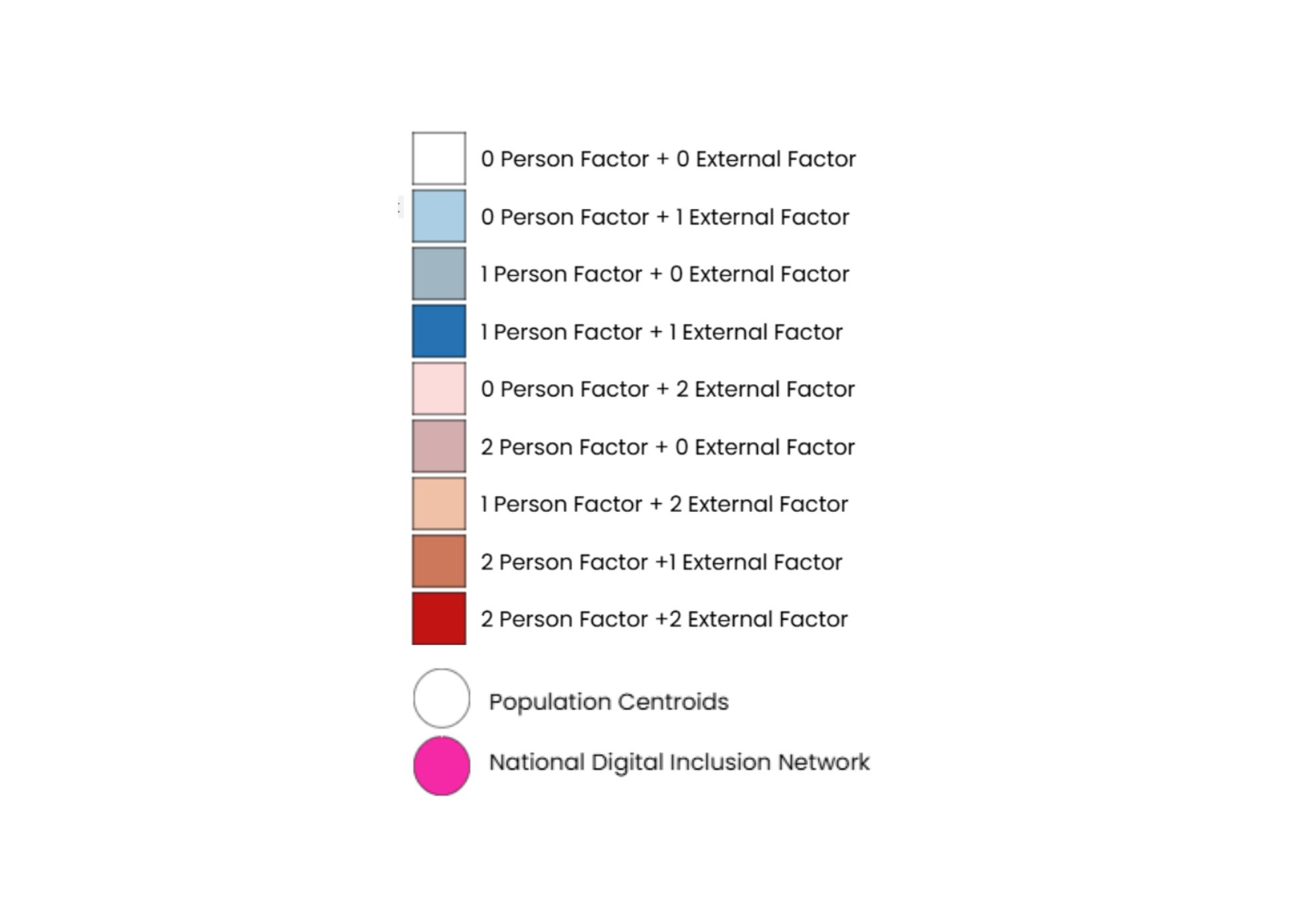
The key used in the maps reflects the analytical framework set out below.
Show image description Hide image description
This image is a matrix-style diagram explaining how different personal and environmental factors overlap. The colours in the matrix match to the colours on the maps.
The matrix is divided into four rows and four columns. The y-axis, labelled "Environmental Factors" has four categories, each corresponding to a row. From top to bottom:
- None
- External Support (measured by Community Needs Index)
- Income (Measured by the Indices of Multiple Depreciation)
- Financial Risk and Rely on Support (combination of the above)
The x-axis, labelled “Personal Factors ”, has 3 categories, each corresponding to a column. From left to right:
- Access (measured by Ofcom based population analysis )
- Skills (measured by Ofcom based population analysis)
- Access and Skills (combination of the above)
Show image description Hide image description
A Map Key showing:
- White: 0 Person Factor + 0 External Factor
- Light Blue: 0 Person Factor + 1 External Factor
- Grey-Blue: 1 Person Factor + 0 External Factor
- Dark Blue: 1 Person Factor + 1 External Factor
- Light Pink: 0 Person Factor + 2 External Factor
- Muted Pink/Dusty Rose: 2 Person Factor + 0 External Factor
- Peach/Light Orange: 1 Person Factor + 2 External Factor
- Dark Orange: 2 Person Factor + 1 External Factor
- Dark Red: 2 Person Factor + 2 External Factor
Barnsley
back to top
Show image description Hide image description
The image shows the Barnsley local authority area, divided into numerous small geographic neighbourhoods (lower Super output areas). The areas are shaded in various shades of white, blue, pink and red. White areas represent 0 factors, blue shades represent combinations with 1 factor, pink shades represent higher combinations, and red represents the maximum of 2 Person Factors and 2 External Factors. There are white dots on the map, which show population density, which tells us how crowded an area is with people. The middle and right sides of the map have more of the neighbourhoods shaded in and with more of the white dots. From this we know more people live in the middle and right of the local authority.
Cornwall
back to top
Show image description Hide image description
The image shows the Cornwall local authority area, divided into numerous small geographic neighbourhoods (lower Super output areas). The areas are shaded in various shades of white, blue, pink and red. White areas represent 0 factors, blue shades represent combinations with 1 factor, pink shades represent higher combinations, and red represents the maximum of 2 Person Factors and 2 External Factors. There are white dots on the map, which show population density, which tells us how crowded an area is with people. There are no key patterns in the shading of the neighbour hoods or the distribution of population, as demonstrated by the white dots.
Middlesborough
back to top
Show image description Hide image description
The image shows the Middlesbrough local authority area, divided into numerous small geographic neighbourhoods (lower Super output areas). The areas are shaded in various shades of white, blue, pink and red. White areas represent 0 factors, blue shades represent combinations with 1 factor, pink shades represent higher combinations, and red represents the maximum of 2 Person Factors and 2 External Factors. There are white dots on the map, which show population density, which tells us how crowded an area is with people. There are no key patterns in the shading of the neighbour hoods or the distribution of population, as demonstrated by the white dots.