
Edna’s story: Overcoming fear and finding connection through tech
Before, technology felt unfamiliar for Edna. She was afraid of doing something wrong. But when her husband, Leonard, was working overseas, she needed a better way to communicate with him. “Snail mail” took weeks to arrive—or sometimes didn’t reach him at all. So, the pair turned to technology. After looking at magazines, they were able to find a laptop to fit their needs, and Edna was able to get in touch through email.
“It was a revelation and a big improvement,” Edna says. “It's a question of having a go and then finding that it's not the end of the world if you've done it wrong, you can try again in a different way. Trial and error is really important.”
Taking the back off the laptop
One day, when Leonard was away, the laptop failed. After contacting support, the problem still wasn’t solved, so it was up to Edna to fix it.
The 79-year-old added: “I took the back off and put a bit of kit in it and made it go back together again.”
Using technology wasn't entirely new to Edna; when she worked in further education, her role involved supporting people with disabilities who were using computers. But keeping up with modern tech as a retiree was a new challenge.
From QR codes to family history
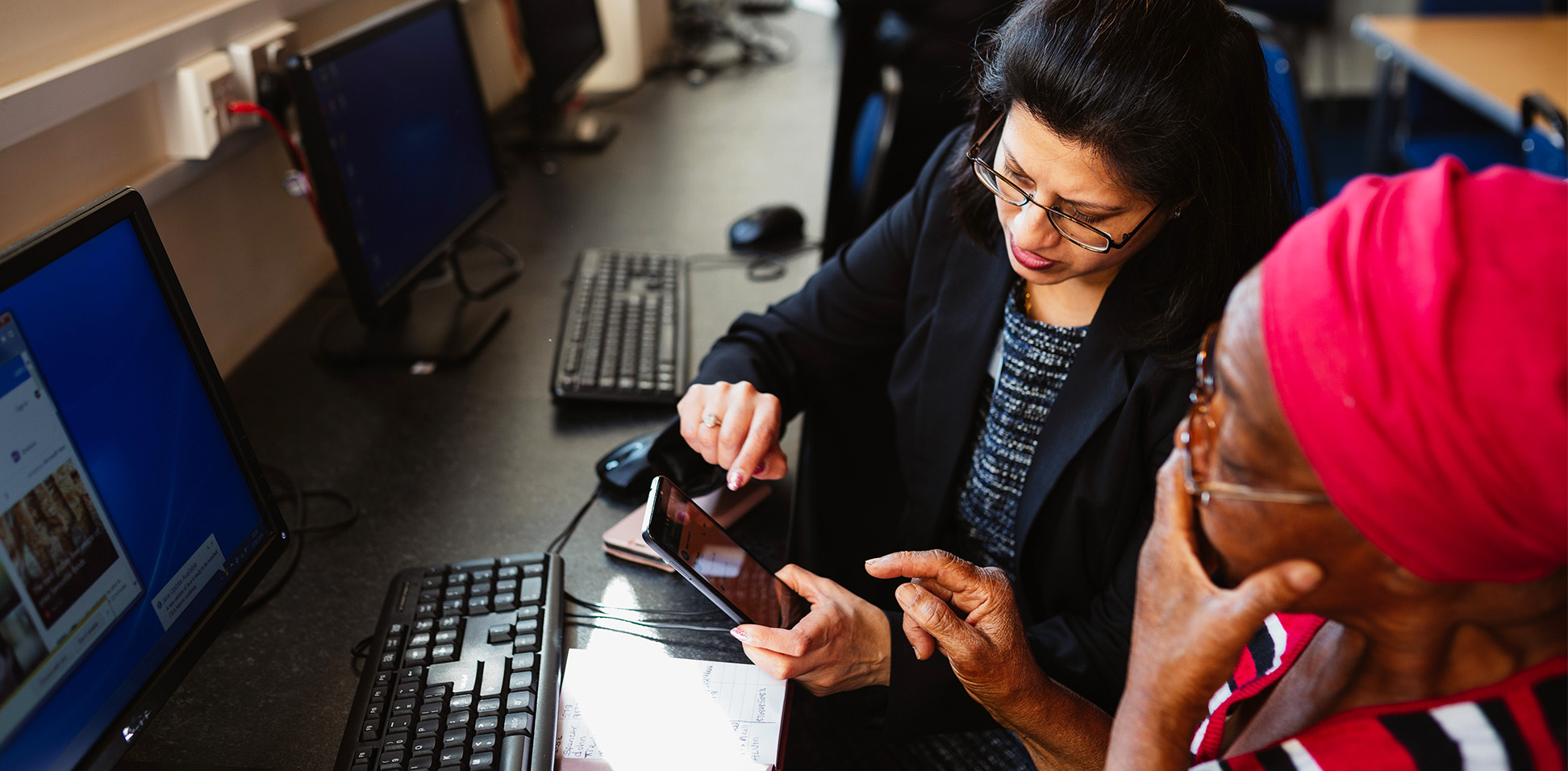
Along with Leonard, she started going to her local library and community hub in Acklam, which is part of the National Digital Inclusion Network. There, they saw a notice promoting digital support for smartphones.
It opened up completely new ways for the pair to use technology. Now retired, Edna feels she is able to do more than what she was able to do before.
“We got rather hooked on other things from that," she said. "We were looking up family history using Ancestry and then QR codes and it just mushroomed. And socially it’s very good… it’s a very welcoming environment always. The library staff are really supportive in every way… It’s really a vital piece of our life now.”
Breaking down the barriers to support
While community support has been essential for the couple, Edna feels there is still a lot of room for improvement when it comes to language, location, and approach.
For starters, she feels the wording around digital support is “not very user friendly.” For her, using simpler language to include everybody would make a massive difference.
Plus, not everyone attends a library, which she says “does now leave a lot of people out” especially when trying to navigate essential services like the NHS app.
“Why isn't there something, maybe there is, in surgery waiting rooms to explain how it works or who will tell you how to use it?" Edna asks. "That's going to reach more people than just those who happen to go to libraries, read notice boards and then act upon them.”
It's well worth investing in us
Making tech support more approachable is also key. Edna believes formality often puts older people off.
“If you are in a formal setting with a formal title and you're behind a desk, people are less likely to come and ask for help," she explains. "If only the majority of people knew that there was somebody who could speak their own language and make them feel comfortable about making inquiries, that would be a plus.”
Edna and others like her don’t want to be left behind - but she feels many, particularly older generations, are feeling that way because digital alternatives are disappearing.
“It's well worth investing in us so that we can use all the things that have become available to us now," she says. "People will have a go if they feel they're not going to be patronised or made to feel that they're begging or asking for something when the things are right there available.”
The What Works? Co-Lab report
We met Edna during a series of pilots with Barnsley, Cornwall, and Middlesbrough Councils to test what really works. Now, you can discover proven strategies and actionable takeaways to help your local authority embed digital inclusion into core services.
You may also be interested in
-
 28/05/2026 Our news
Good Things launches National Toolkit to help Councils make digital skills a local priority
Good Things Foundation has released a new national report and practical framework designed to help Local Authorities embed digital inclusion into their services.
-
 08/06/2026 Stories & case studies
Tricia’s story: Bridging the creative gap in Cornwall
For Tricia, a professional concept artist who has worked on legendary productions like Doctor Who and Disney, imagination has never been the problem. However, as the world moves toward an exclusively digital future, Tricia finds herself facing a "digital wall" that threatens to stall her career and deepen her isolation in rural Cornwall.