
Only 1 in 3 UK adults are 'comfortably online' as new data exposes hidden barriers facing 34 million people
Our new Digital Nation data reveals that 34 million UK adults face hidden digital barriers, with only 1 in 3 truly 'comfortably online'. Explore the shifting scale of the UK's digital divide and the urgent public call for change.
- New research reveals that 34 million adults are online with some barriers or vulnerabilities, including data poverty, lack of basic skills, and low confidence in AI
- 73% of UK adults think digital inclusion should be part of how public services are designed
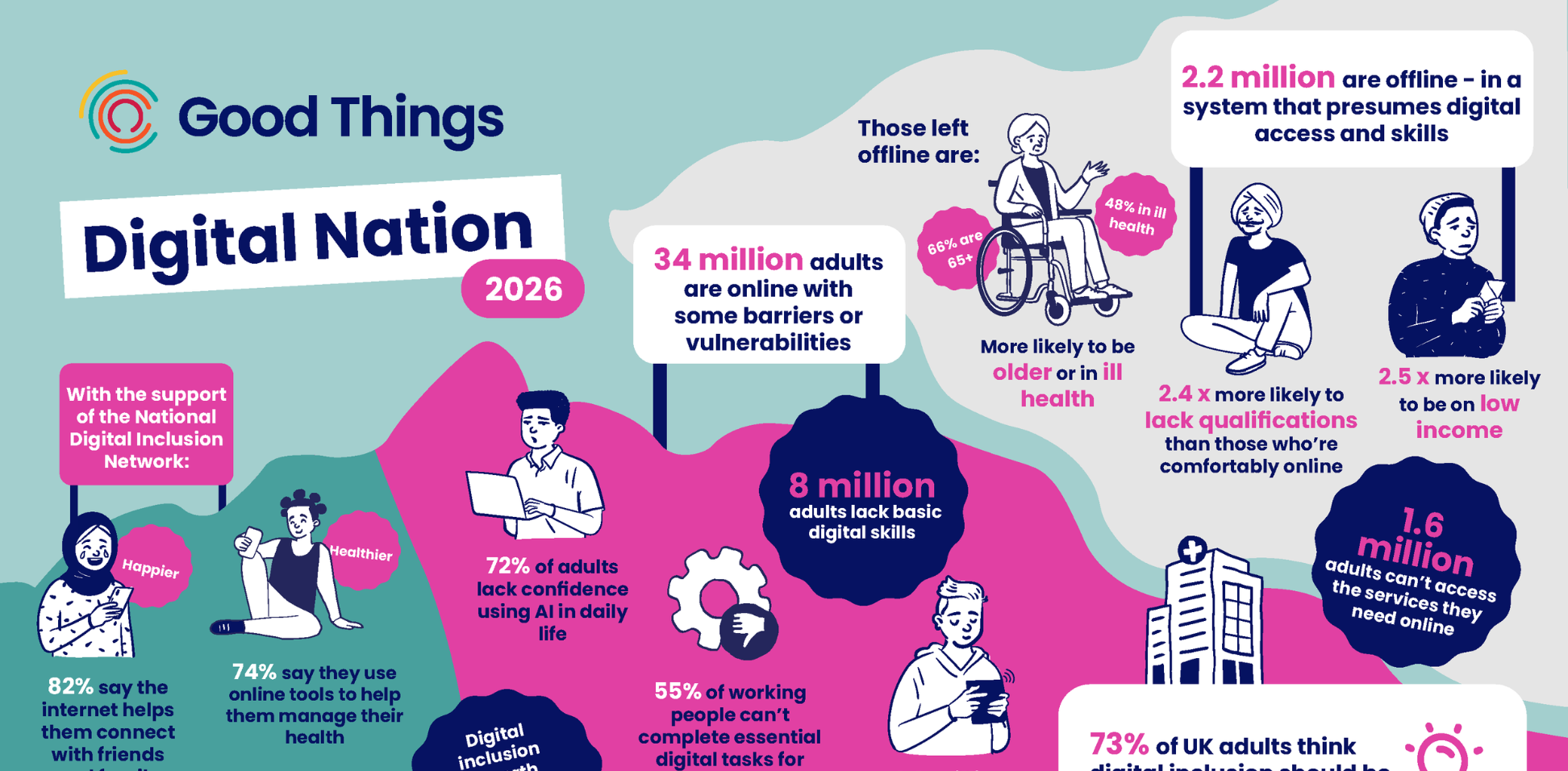
On Tuesday 14th July, we launched our annual Digital Nation infographic. This years research reveals a stark reality, despite widespread internet access, only 1 in 3 UK adults are comfortably online, while a staggering 34 million adults are navigating the digital world with barriers or vulnerabilities.
The findings were launched at our parliamentary reception at the House of Lords, featuring a compelling address from our CEO Vicki Sellick MBE, hosted by Baroness Julie Elliott, and a keynote speech from Baroness Liz Lloyd. The event brought together 160 cross-sector leaders, government officials, and community partners to address the shifting landscape of the UK's digital divide.
A new way of measuring the divide
For the first time, this year’s Digital Nation framework utilises our newly developed Indicators of Digital Inclusion (IDIs). Built in collaboration with cross-sector experts, the IDIs act as a unified tool to measure the true depth of digital exclusion.
The headline data, analysed from the Money and Pensions Service (MaPS) 2026 MoneyView survey, exposes the hidden hurdles that prevent people from participating fully in a digital society.
The data reveals that:
- The Scale of Exclusion: 2.2 million adults are offline in a digital system that presumes digital access and skills
- The Skills Gap: 8 million adults lack basic digital skills, and 55% of working people can’t complete essential digital tasks for work
- Emerging Tech Anxiety: 72% of adults of adults lack confidence using AI in daily life
- The Affordability Crisis: People with higher digital financial capability save £815 more per year
Speaking on the launch, Vicki Sellick, CEO of Good Things Foundation, said:
"It is incredibly easy to assume that if someone is 'online,' they are doing fine. This year’s data completely dismantles that myth. Simply having a connection does not equal safe, confident, or affordable inclusion. With millions of households struggling to afford mobile bills and over half the workforce unable to do basic digital tasks, the divide is about who is being left behind by rapid technological shifts like AI. We need systemic, nationwide action to fix this divide for good."
The public demands action
The report also highlights a massive wave of public support for government intervention and inclusive design, backed by recent Public First polling:
- 73% of UK adults think digital inclusion should be part of how public services are designed
- 82% think everyone should have the skills and access needed to use the NHS app safely and confidently
- 72% think the government should be doing more to tackle digital exclusion
The economic and personal payoff
While the scale of the divide remains severe, the report highlights the immense value of digital intervention. Independent analysis by the CEBR shows that achieving full digital inclusion is worth £13 billion to the UK economy. Furthermore, data from the National Digital Inclusion Network demonstrates that when individuals receive hands-on support, 82% feel happier and more connected to family, 74% secure better employment or learning opportunities, and 74% say online tools help them manage their health.
We calling on corporate partners, funders, and policymakers to utilise the free Digital Nation resource to ground future public services, funding bids, and community interventions in robust data.
For media enquiries or interview requests with Vicki Sellick, please contact: press@goodthingsfoundation.org
You may also be interested in
-
 14/07/2026 Research & evidence
Our Digital Nation
What is the state of the UK's digital divide? Each year, Good Things Foundation gathers new facts and stats to reveal the reality of digital exclusion.
-
.png) 28/05/2026 Research & evidence
28/05/2026 Research & evidenceStrengthening a place-based approach to digital inclusion
A What Works? Co Lab Report from Good Things that shares six key lessons and the Digital Inclusion Partnership Pathway tool to help local authorities and cross-sector partners strengthen collaboration and address digital inclusion where they are.
-
 17/07/2025 Research & evidence
Exploring the links between digital inclusion and physical activity
We worked in partnership with Sport England to carry out research to understand the links between digital inclusion and physical activity.