Addressing digital barriers to being active
Our research with Sport England explores the digital barriers preventing people from being active and offers recommendations to make sport and physical activity more digitally accessible.
There are many ways in which people use digital on the journey to being active, but this can be challenging if you lack digital access, skills or confidence. Our recent research with Sport England explores these barriers, and recommends actions for making sport and physical activity more digitally accessible.
Below is a summary of the findings from the project. You can access the full report and a summary infographic from the downloads section of this page.
Our research findings
In partnership with Sport England, we conducted research to understand how digital shapes people’s access to and experience of sport and physical activity, and identifies good practice for reducing digital barriers to being active. The research builds on existing understanding of the overlap between the groups who face inequalities in being active and the groups who face inequalities in being online (Sport England & Good Things Foundation, 2025).
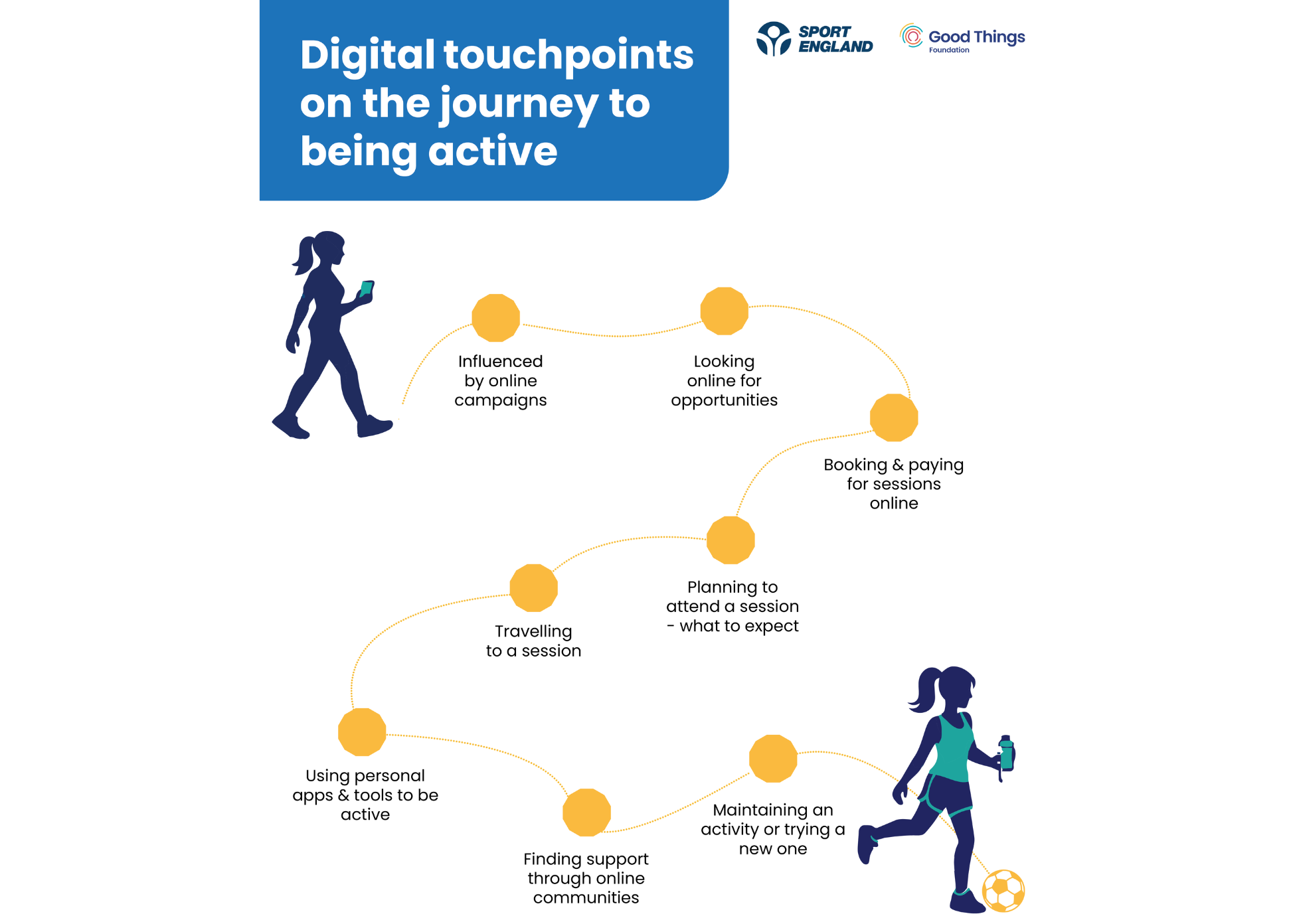
Participating in sport and physical activity typically involves multiple digital touchpoints: from finding information about local activities, through booking and paying online, to the use of digital technologies for engaging in or enhancing activity. It is crucial we understand how best to reduce digital barriers to ensure everyone has equal opportunity to participate in sport and physical activity.
Show image description Hide image description
A graphic illustrating 'Digital touchpoints on the journey to being active'. The journey starts with a silhouette of a person walking and using a phone, and ends with a silhouette of a person playing football. The touchpoints are: Influenced by online campaigns, Looking online for opportunities, Booking & paying for sessions online, Planning to attend a session - what to expect, Travelling to a session, Using personal apps & tools to be active, Finding support through online communities and Maintaining an activity or trying a new one. The graphic includes the logos for Sport England and Good Things Foundation.
We conducted in-depth research between October 2025 and January 2026 with people with lived experience of facing digital barriers to being active, and with organisations working across the digital inclusion and sport / physical activity sectors.
Digital barriers limiting participation in sport and physical activity:
| Category | Digital barriers |
|---|---|
| Access |
|
| Skills & confidence |
|
| Trust & Safety |
|
| User experience |
|
What works:
- Providing digital skills & access support in trusted, local spaces
- Fostering social connections to build confidence for digital & physical activity
- Understanding needs & preferences of your audience around digital
- Accessible, inclusive digital platforms, with non-digital support where needed
- Partnerships enabling signposting to support for digital & physical activity
Recommendations for reducing barriers:
1. Build understanding of the range of digital barriers faced by the populations you want to support to be more active
By embedding questions into customer or population surveys, into registration processes, and into equality impact assessments, you can collect data on digital barriers faced and use the insights to design sport and physical activity opportunities that are more digitally inclusive.
2. Provide local support for digital connectivity, devices and skills
Engage with existing resources and guidance (see for example the National Digital Inclusion Network) to help embed digital inclusion support into sport and physical activity services, and signpost to existing trusted, local organisations, who help people build capability to get online and be more active.
3. Make it easier for people to navigate and use online sport and physical activity platforms
To reduce barriers to accessing information and opportunities to be active, platforms should be designed with the needs of people with low digital skills in mind, through user-centred design and innovation best practice. Multiple channels for sharing information and providing support - including offline channels - should also be provided
4. Build partnerships for place-based support around digital and physical activity
As barriers to accessing digital services are not limited to the sport and activity sector, there is great benefit in establishing partnership working across sectors and places, including health and social prescribing services and the VCSE sector, to facilitate local access to digital inclusion support, and reduce barriers to being active.
Don't how to measure digital exclusion?
Together with a group of organisations, we've developed a series of questions that you can integrate into your surveys to help build our collective understanding of the depth and breadth of digital inclusion in the UK.