As the UK’s leading digital inclusion charity, we sit at the intersection of national policy and local impact. These indicators are the result of over 15 years of researching what works for digital inclusion, and what doesn't.
Our goal was to find the "good enough" set of questions - a simple, reliable toolkit that anyone could pick up and use immediately. We knew that for these indicators to actually be useful, they had to be two things: short and accessible.
Why we kept the indicators short and simple
We’re realistic about how surveys work. Whether you’re adding a few lines to a council feedback form or a service registration, space is limited. By keeping the question count low, we make it easier for you to embed these indicators to your existing surveys.
Crucially, we also prioritised clear, plain English. Digital exclusion often goes hand-in-hand with lower literacy levels or English as a second language, so we removed any jargon to ensure no one is excluded from the survey itself.
Connecting the dots
When we looked at existing survey questions on digital inclusion, we noticed a gap.
Most surveys tended to focus on one element of digital exclusion. For example Ofcom’s Adult Media Literacy Tracker and Lloyd’s Consumer Digital Index (CDI) focused on the skills elements of digital inclusion and exclusion, without looking at how access to the internet (through connection or device) may be impacting individuals.
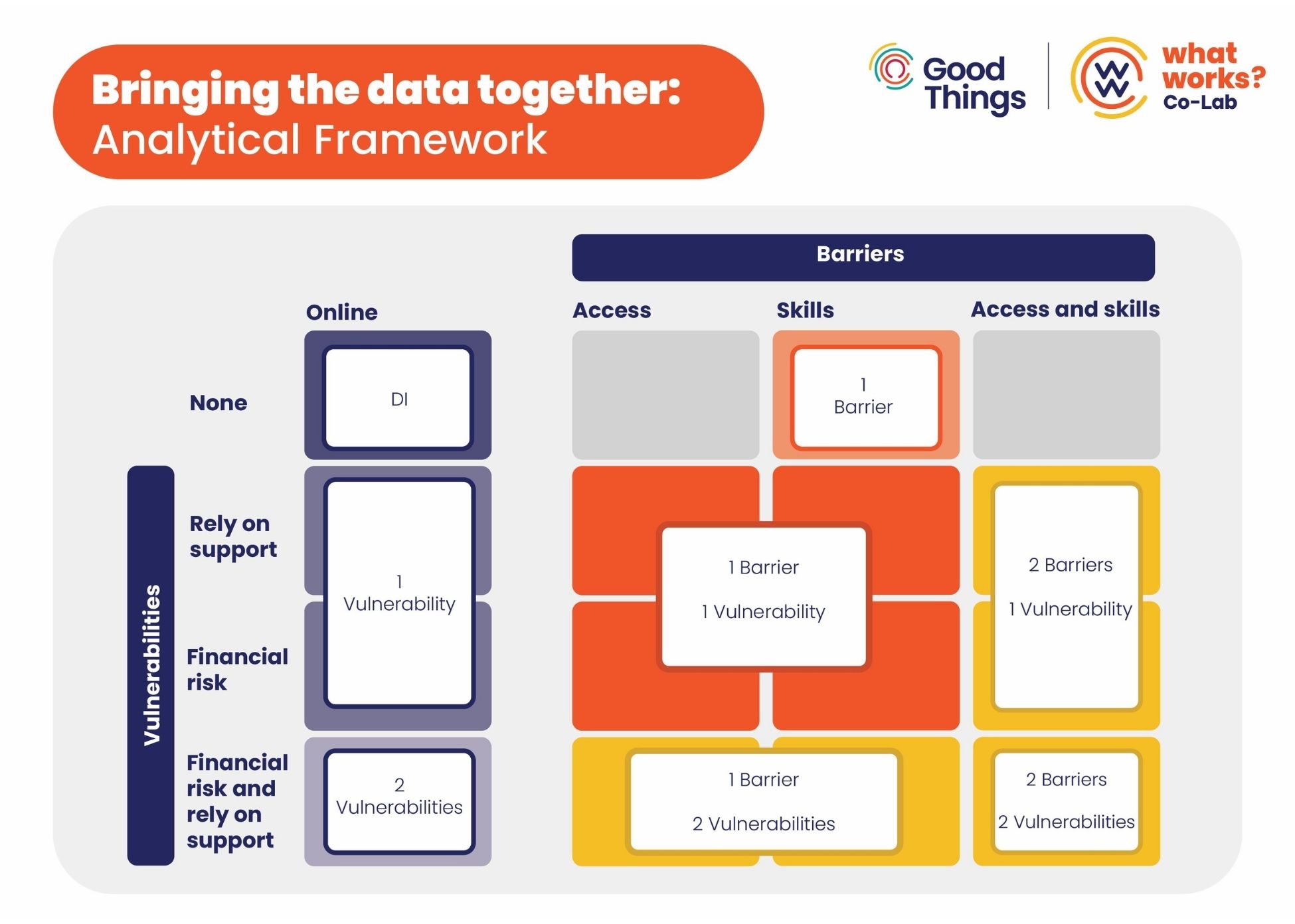
We didn't want a fragmented view, but to be able to look at an individual’s experience of digital inclusion as a whole. So, we used the expertise of Ofcom, the BBC, Lloyds Banking Group, Greater Manchester Combined Authority and Liverpool City Region. Together, we discussed the barriers to digital inclusion and how these could be addressed in the question design.
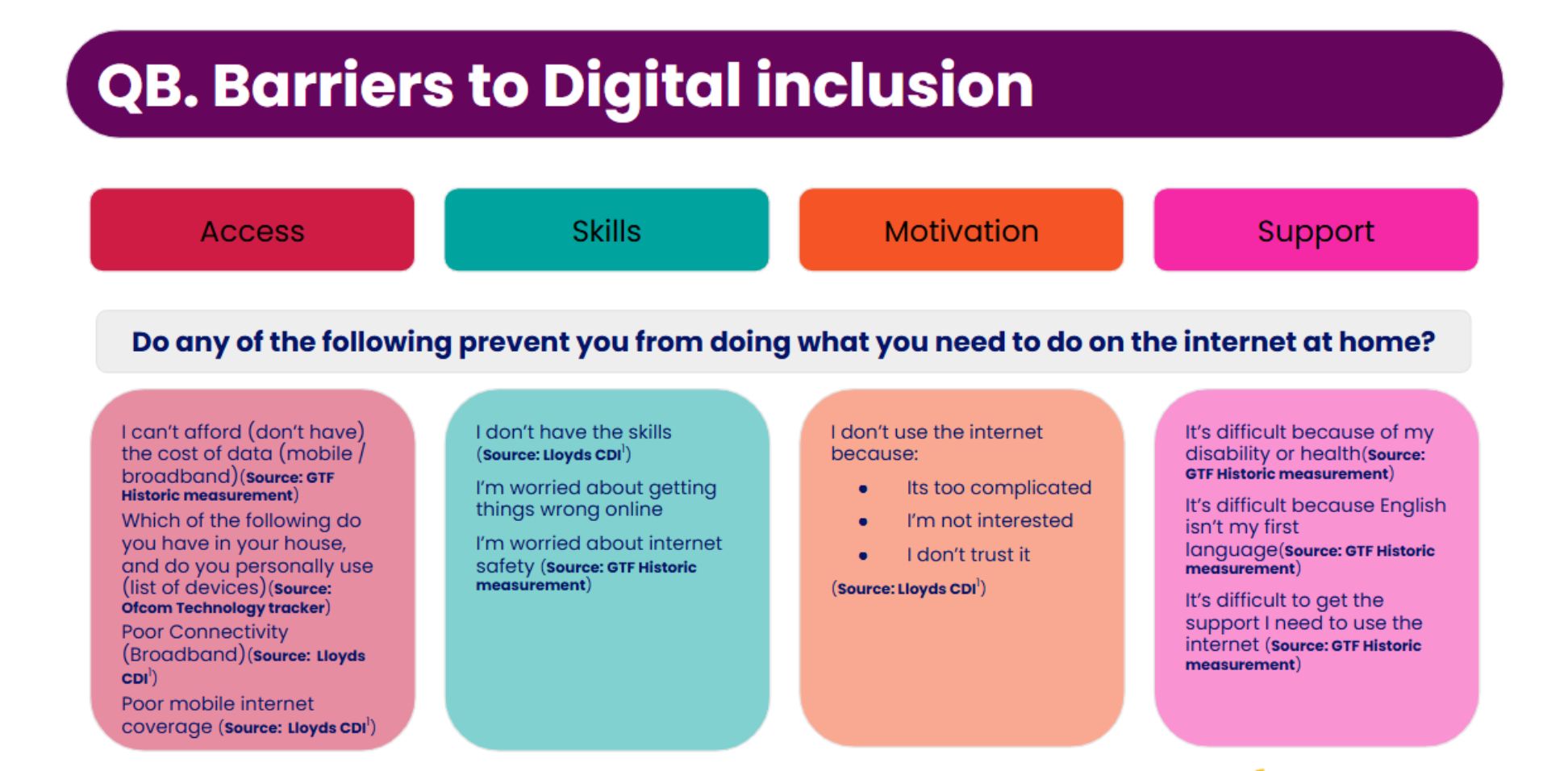
By synthesizing themes from the Minimum Digital Living Standard (MDLS) and others, we ensured our questions cover the key barriers to digital inclusion: access, skills, motivation and support.
The result: A unified standard
All these moving parts—the research, the frontline reality checks, and the cross-sector expertise—were brought together to create these core indicators. They aren't just questions; they are a standardized way to see the full picture of digital inclusion in your community.
In collaboration with